

Malaga in 3 Days at a Glance
- Ideal trip length: 3 days
- Most attractions can be explored on foot
- Top highlights: Alcazaba, Gibralfaro Castle, Malaga Cathedral and the Picasso Museum
- Best time to visit: spring and autumn
- Malaga Airport is only about 15 minutes from the city centre
Malaga is often associated with sunshine, beaches and holidays on the Costa del Sol. However, it is also one of Europe’s oldest cities, with a history dating back nearly 3,000 years.
If you are planning a short city break, this tailor-made 3-day Malaga itinerary will help you discover the city’s most important landmarks, viewpoints and places connected with Pablo Picasso. You will also find practical travel tips to make the most of your stay.
One of Malaga’s greatest advantages is that most attractions are located within walking distance of each other. This makes it easy to explore the city at a relaxed pace without relying heavily on public transport.
Day 1. A Journey Through Malaga’s History
Alcazaba: A Moorish Fortress in the Heart of Malaga
Start your visit at Alcazaba, one of the best-preserved Moorish fortresses in Spain. Built in the 11th century, it served as both a defensive stronghold and a residence for local rulers during Muslim rule.
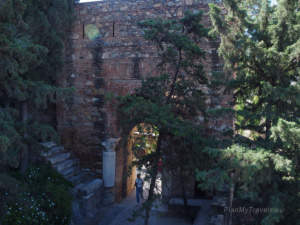

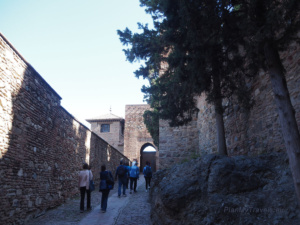
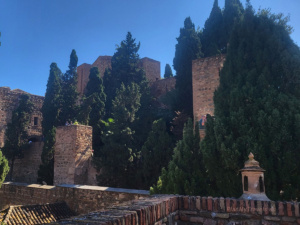
Allow around 1.5 to 2 hours for your visit. The entrance is located on Calle Alcazabilla, right next to the Roman Theatre. If you are staying in the city centre, you can easily walk there.
From the moment you step inside, you will notice elegant horseshoe arches, peaceful courtyards and countless fountains.
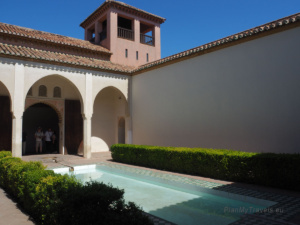
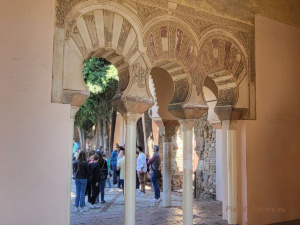
Water played an important role in Moorish architecture, which is why it appears throughout the complex.

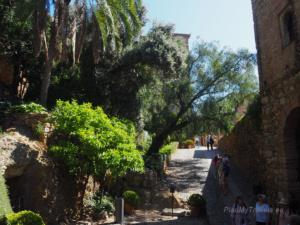
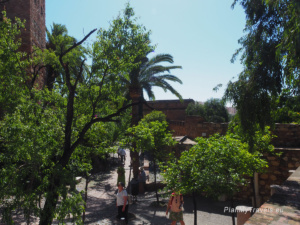
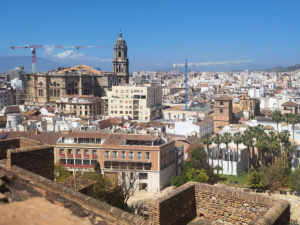
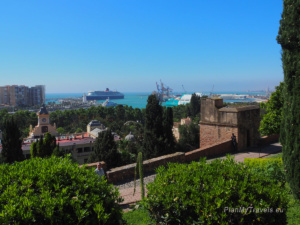
As you make your way through the different levels of the fortress, increasingly impressive views open up over the port, the Old Town and Gibralfaro Hill.

Interesting Fact
Some of the stones used to build parts of the Alcazaba were taken from the nearby Roman Theatre. While this recycling might seem surprising today, it was common during the Middle Ages.
Tickets and Visitor Information
Official website: Alcazaba and Castillo de Gibralfaro
My tip: Buy the combined ticket for both the Alcazaba and the Castillo de Gibralfaro. It offers better value and lets you access both monuments with a single ticket.
Roman Theatre: Malaga’s Oldest Monument
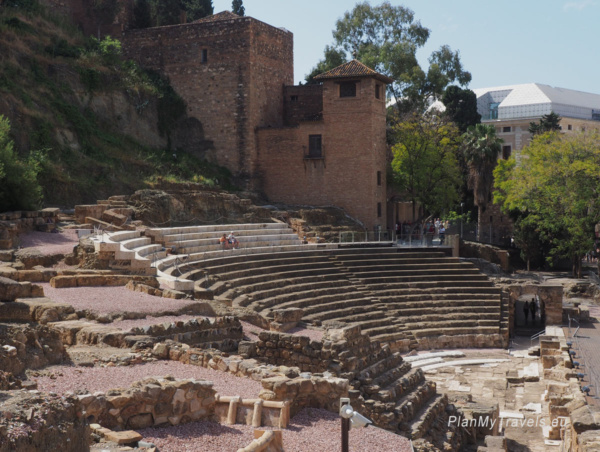
Just a few steps from the Alcazaba entrance stands the Roman Theatre (Teatro Romano), the most important surviving reminder of Roman Malaga. It was built in the early 1st century AD during Emperor Augustus’s reign.
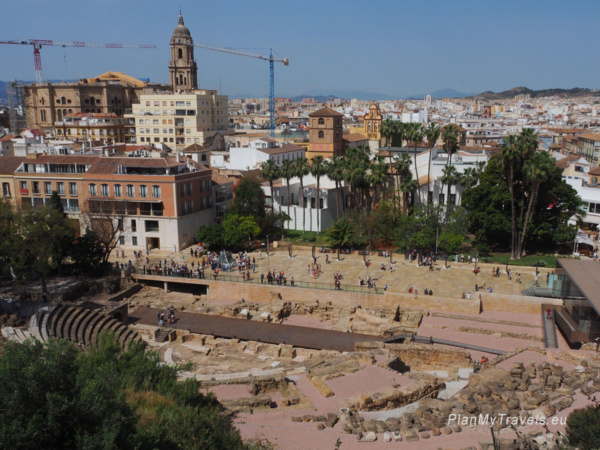
You do not need much time here. Around 20 to 30 minutes is usually enough to explore both the theatre and the small interpretation centre.
Despite its modest size, the site is remarkably impressive, especially from Calle Alcazabilla. From this perspective, the ancient ruins are framed by the towering walls of the Alcazaba above them, creating one of Malaga’s most iconic views.
Interesting Fact
For centuries, the theatre remained hidden beneath later buildings. It was only rediscovered in 1951 during construction work.
Visitor Information
Official website: Teatro Romano
Lunch in the Historic Centre
After visiting the Alcazaba and the Roman Theatre, it is time for a well-deserved break.
The area around Calle Alcazabilla is filled with restaurants, cafés and tapas bars. To experience local dining traditions, order several small tapas dishes instead of one large meal. This is exactly how many Andalusians enjoy lunch with family and friends.
Malaga Cathedral: The Famous “One-Armed Lady”
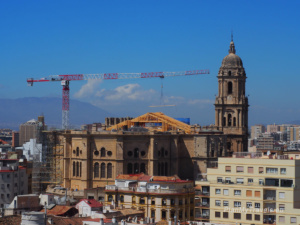
After lunch, head to Malaga’s most important religious landmark. The Cathedral of the Incarnation is one of Andalusia’s most recognisable buildings.
Locals affectionately call it La Manquita, which means “The One-Armed Lady.” The nickname comes from the fact that the original design included two towers, but only one was ever completed. Over time, this unfinished tower became one of Málaga’s most distinctive symbols.


Construction of the cathedral lasted more than 250 years. Inside, visitors are welcomed by an impressive interior featuring soaring columns, an enormous nave and an intricately carved choir. Plan approximately one hour for your visit.
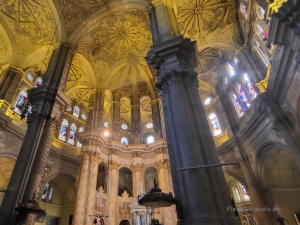
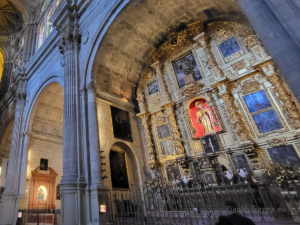
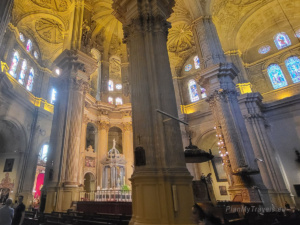
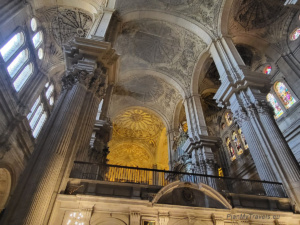
If rooftop access is available during your visit, I highly recommend it. The views over the Old Town, the port and Gibralfaro Hill are worth every step of the climb.
Interesting Fact
The cathedral was built on the site of a former mosque following the Christian reconquest of Malaga in the late 15th century.
My Practical Tip
Ticket machines are located outside the cathedral entrance. This is particularly useful if you plan to visit the following morning.
Visitors can buy tickets in the evening, even after the cathedral closes. They email the confirmation, and you can show the digital ticket on your smartphone at the entrance. No one needs to print anything or wait in line at the ticket office.
Tickets and Visitor Information
Official website: Malaga Cathedral – Tickets and Visitor Information
Evening Walk Through the Old Town
After a day filled with history and culture, I would not plan any additional sightseeing. Malaga is at its most charming in the evening.
Take a leisurely stroll along Calle Larios, visit Plaza de la Constitución and Plaza del Obispo, and settle down at one of the local restaurants. Once the cathedral is illuminated and the squares fill with the sounds of locals and visitors, you begin to experience Andalusia’s true atmosphere.

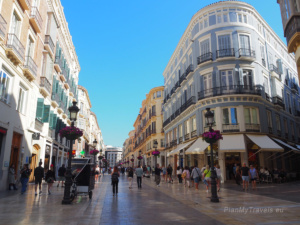

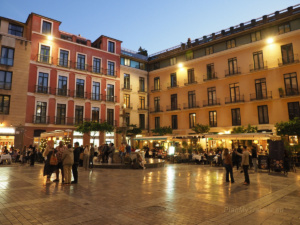


As you continue towards the port, look for the statue of Hans Christian Andersen near Plaza de la Marina. The famous author visited Malaga in 1862 and fell so deeply in love with the city that he later wrote: “In no other Spanish city have I felt so happy and so comfortable as in Malaga.”

That’s when you begin to understand why so many travellers return to Malaga again and again.
Day 2. Malaga from Above and a Journey into Art
After a day filled with history, it is time to see Malaga from a different perspective. Today, you will enjoy some of the city’s best viewpoints. You will also visit one of Andalusia’s most important art museums. Finally, you will discover a place that has sparked debate in Spain for decades.
Castillo de Gibralfaro: The Best Viewpoint in Malaga
If I had to choose just one viewpoint in Malaga, it would be Castillo de Gibralfaro. The fortress was built in the 14th century on a hill overlooking the city. For centuries, it played an important defensive role. Today, however, most visitors come here for the spectacular views.
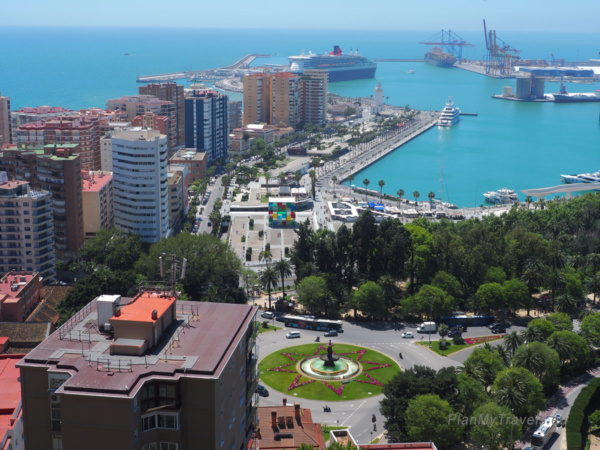
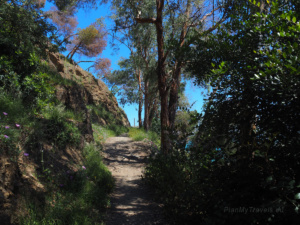
If you enjoy walking, I highly recommend reaching the castle on foot. The route follows La Coracha, a historic fortified passage that once connected Alcazaba with the castle. During the Moorish period, soldiers could move between the two fortresses without leaving the defensive walls.
Along the way, you will pass sections of the old fortifications. At the same time, the views over Málaga become more impressive with every step.
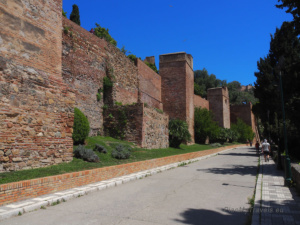


The walk takes around 20 to 30 minutes. In some places, the path is quite steep. However, the scenery makes the effort worthwhile. If you prefer a more comfortable option, you can take bus number 35 or a taxi. Once at the top, allow around 1.5 to 2 hours for your visit.


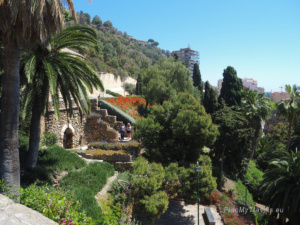
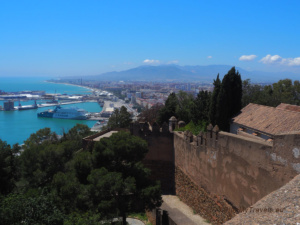
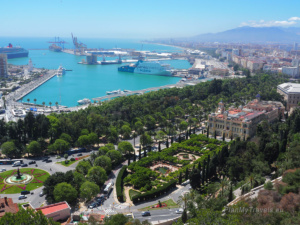
One highlight is walking along the defensive walls. From there, you can enjoy panoramic views of the port, the historic centre, Plaza de Toros, La Malagueta Beach and the Alboran Sea.


Interesting Fact
The name Gibralfaro comes from the Arabic expression Jabal-Faruk, which translates to “Mountain of the Lighthouse.” Long before the fortress was built, this hill served as a landmark for sailors approaching the port.
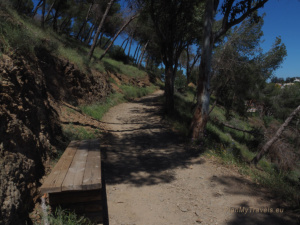
When you return to the city centre, you don’t have to follow the same route. Instead, consider walking through the park surrounding Gibralfaro Hill. The path is peaceful and very scenic. Moreover, new views of the city and the port appear around almost every corner.
Tickets and Visitor Information
Official website: Alcazaba and Castillo de Gibralfaro
If you purchased the combined ticket for Alcazaba and Castillo de Gibralfaro the day before, you can use it here as well. Therefore, it remains the most convenient and cost-effective option.
Plaza de la Merced: Where Picasso’s Story Began
As you make your way down from the hill, stop at Plaza de la Merced. This is one of Malaga’s most famous squares. It is also the place where Pablo Picasso was born.
The square is full of life throughout the day. So it is a great place to stop for a coffee, enjoy a light breakfast, or take a short break before continuing your sightseeing.
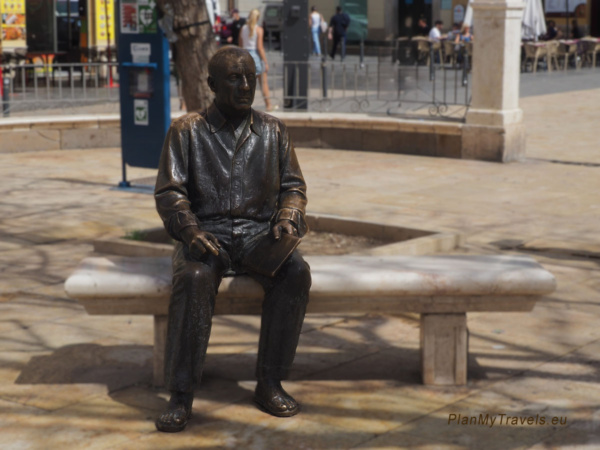
At the centre of the square stands a monument dedicated to General Torrijos. One bench also features a bronze statue of Pablo Picasso. The artist is depicted sitting casually among locals and visitors. As a result, it has become one of the most photographed spots in this part of Malaga.
Picasso Museum: Discover Malaga’s Most Famous Artist
It is hard to imagine a visit to Malaga without learning something about Pablo Picasso. Although Picasso spent most of his life outside Spain, he was born here. It was also in Malaga that his artistic journey began.
The museum is housed inside the beautiful 16th-century Palacio de Buenavista. The building alone is worth a visit. However, the collection inside is even more impressive.

Allow between one and two hours for your visit.
Visitors expecting to see only Picasso’s most famous masterpieces may be surprised. Instead, the museum focuses on the artist’s development throughout his life. You will find paintings, drawings, sculptures, prints and ceramics. As a result, it becomes much easier to understand why Picasso is considered one of the most influential artists of the 20th century.
My Practical Tip
During the high season, tickets for specific time slots can sell out quickly. So, if you are visiting in summer or on a weekend, book your ticket online one or two days in advance.
Interesting Fact
Although Malaga is Picasso’s birthplace, he left the city as a young child. Nevertheless, locals remain extremely proud of their most famous citizen. As a result, you will come across Picasso’s name almost everywhere in the city.
Plaza de Toros La Malagueta: A Glimpse into Spanish Tradition
Just a short walk from the city centre, you will find Plaza de Toros La Malagueta. It is one of Spain’s most famous bullrings.
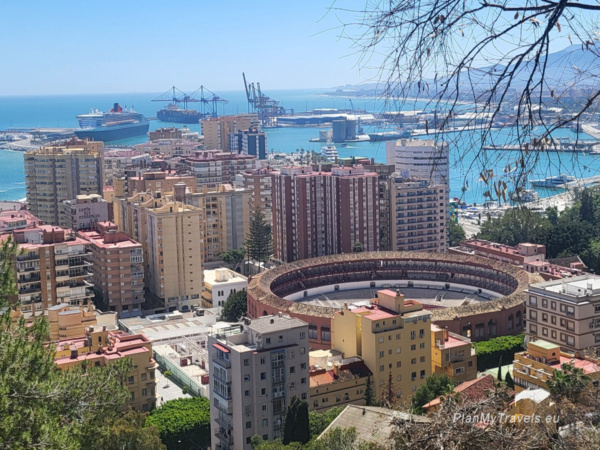
Even if bullfighting doesn’t interest you, the building is worth seeing from the outside. The arena opened in 1876 and has become one of Málaga’s most recognisable landmarks. Its distinctive brick architecture looks especially beautiful against the blue sky and the nearby sea.
Inside, you will also find a small museum. It tells the story of bullfighting and explains the traditions connected with this centuries-old practice.
Interesting Fact
For many Spaniards, bullfighting was an important part of national culture for generations. Today, however, it remains a topic of debate and controversy.
Nevertheless, a visit to the museum offers valuable insight into its historical significance, regardless of your personal views.
An Evening with a View of the Port
After a busy day, I recommend heading towards the port and Muelle Uno. It is the perfect place for dinner and a relaxing sunset walk. The promenade is easy to recognise thanks to its modern white structures. These provide shade even during the hottest days of the year.
Muelle Uno offers a completely different side of Malaga. While the historic centre reflects the city’s past, this waterfront area showcases its modern character. You will find restaurants, cafés, shops and beautiful marina views. As the sun sets, the atmosphere becomes even more enjoyable. It is also a great place to slow down after a day filled with history, art and sightseeing.
From the promenade, you can admire luxury yachts, fishing boats and cruise ships arriving at the port. At the same time, the silhouette of Gibralfaro Hill creates a stunning backdrop.
As evening approaches, the lights along the waterfront begin to reflect on the water. As a result, Muelle Uno becomes one of Malaga’s most romantic places. Therefore, if you still have some energy left, stay a little longer and enjoy the atmosphere.


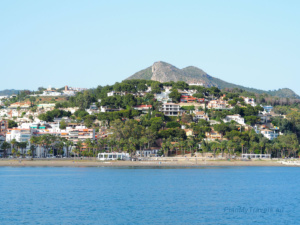
It is the perfect way to end a day spent discovering Malaga’s art, history and spectacular viewpoints.
Day 3. Seaside Malaga and the True Spirit of Andalusia
After two busy days of sightseeing, it is time to slow down. I suggest spending your final day the Spanish way. Take things at a more relaxed pace and combine beach time, seaside walks and visits to places loved by locals.
This is also the day when you begin to understand that Malaga is much more than just a gateway to Andalusia.
Mercado Central de Atarazanas: Breakfast Among Local Flavours
Start your day at Malaga’s most famous market. Mercado Central de Atarazanas is not only a place to shop. It is also one of the city’s most interesting attractions.
The building itself is worth a visit. The impressive entrance gate is a remnant of a Moorish-era shipyard. In addition, don’t miss the stunning stained-glass window at the back of the market hall.
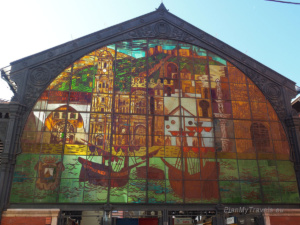

The window depicts key moments from Malaga’s history. As a result, it has become one of the market’s most recognisable features.
Inside, you will find dozens of stalls selling fresh fish, seafood, cheese, olives, vegetables and local cured meats. So it’s an ideal place for breakfast. You can also stop for a few tapas before continuing your sightseeing.
My Practical Tip
Try to visit in the morning. The market is at its liveliest then, and the selection of products is at its best. By midday, some stalls begin to close.
Playa de La Malagueta: Malaga’s Most Famous Beach
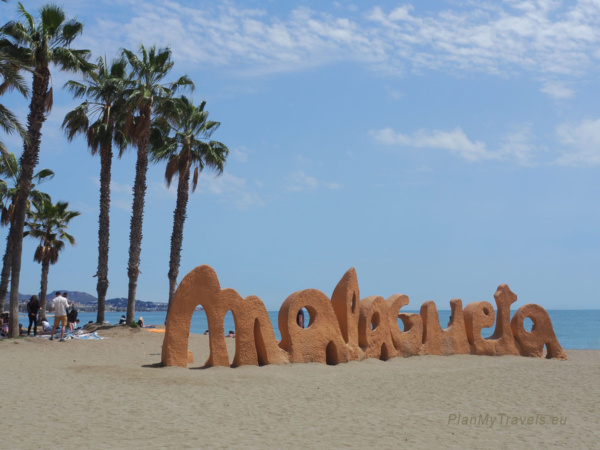
Just a short walk from the city centre lies Playa de la Malagueta. Locals come here to relax after work, go for a morning run, or spend weekends with family and friends.
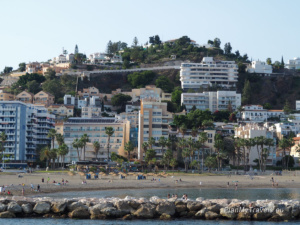
The beach stretches for more than a kilometre. It also offers everything visitors might need. You will find sunbeds, beach bars, restaurants and a wide palm-lined promenade. The views of the Alboran Sea make every walk enjoyable.
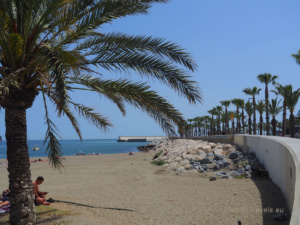


After two days of sightseeing, this is the perfect moment to slow down and simply enjoy Malaga’s Mediterranean atmosphere.
Interesting Fact
The beach takes its name from the old fishing district that developed around the port many years ago.
Espetos: A Local Dish You Should Try
This is not a specific attraction. However, you can’t talk about Malaga without mentioning espetos.
Espetos are sardines skewered on bamboo sticks and grilled over an open fire. Traditionally, they are cooked in small boats filled with sand. Today, they remain one of the most iconic dishes on the Costa del Sol.

If you are planning lunch by the beach, espeto should definitely be on your list.
My tip: The best places aren’t always the most elegant. In fact, some of the best seafood in Malaga comes from small, family-run restaurants near the beach.
Muelle Uno: Malaga’s Modern Waterfront
After some time at the beach, head towards the port.
Before reaching Muelle Uno, take a walk through Parque de Malaga. This green oasis stretches between the city centre and the waterfront promenade. The park is filled with palm trees, exotic plants and shady pathways. As a result, it is hard to believe that you are still in the middle of a busy city.
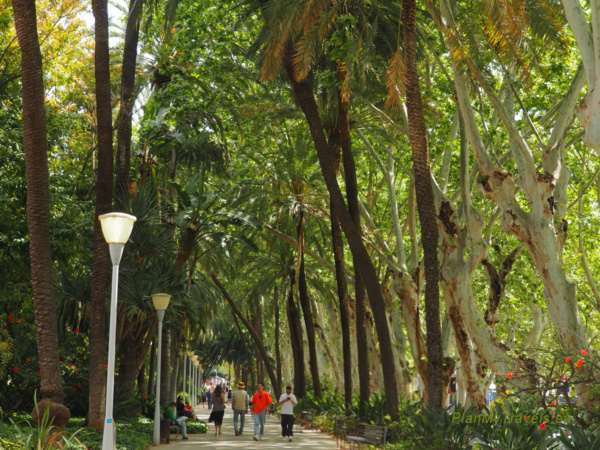
Until a few decades ago, the port area was mainly industrial. Today, however, Muelle Uno is one of the most enjoyable places to walk in Málaga.
You will find shops, restaurants, cafés and beautiful marina views. The promenade also offers fantastic views of yachts and cruise ships. It is a completely different side of the city. So, set aside some time to explore it at a leisurely pace.


La Farola: The Lighthouse That Became a Symbol of Malaga
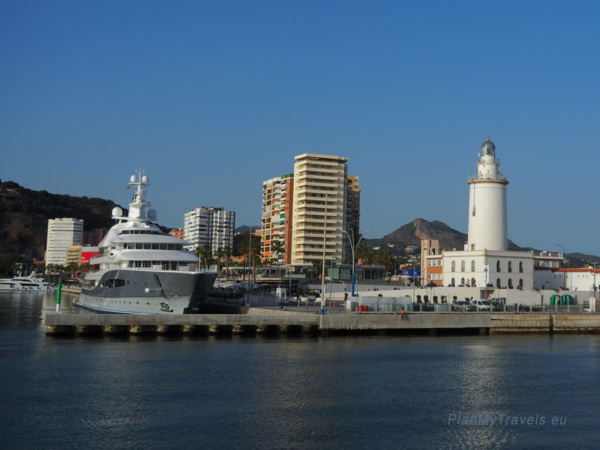
At the end of the promenade stands La Farola, Malaga’s historic lighthouse. For many visitors, it is simply another lighthouse. However, for locals, it is one of the city’s most important symbols.
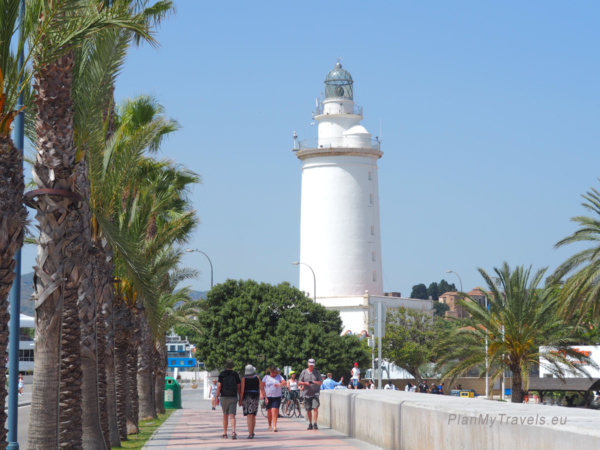
Interestingly, most Spanish lighthouses are referred to with the masculine term el faro. In Málaga, however, everyone calls it La Farola.
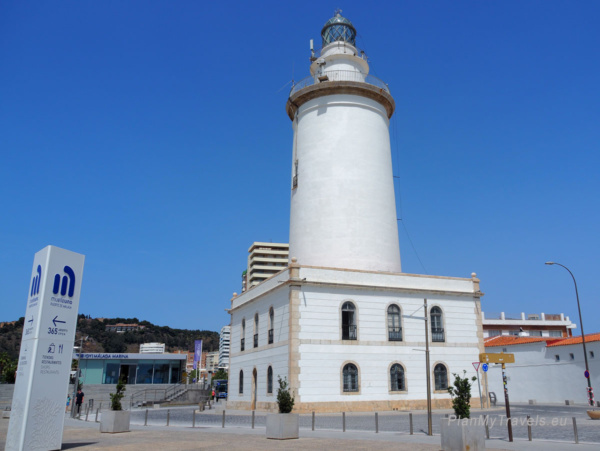
For this reason, it is one of the very few lighthouses in Spain with its own widely used name. It is also a perfect place for your final photos before leaving the city.
Farewell to Malaga
Spend your last evening without a strict plan. Find a restaurant by the waterfront. Order a local beer, a cocktail or perhaps some churros for dessert. Then simply watch the city go by.




After three days, you will have explored Malaga’s most important landmarks. You will have discovered its history, visited places linked to Picasso, admired the views from Gibralfaro and relaxed by the Alboran Sea.
Malaga can surprise you. Within just a few days, you can travel through centuries of history. You move from Roman ruins and Moorish fortresses to a modern marina and the beaches of the Costa del Sol.
Three days are enough to experience Malaga’s main attractions. However, they are definitely not enough to fully fall in love with the city.

And if you decide to stay a little longer, consider taking one of the most spectacular day trips in Andalusia. But that is a story for another article.
Spain, my other posts
I encourage you as well to read my other posts about Spain: