
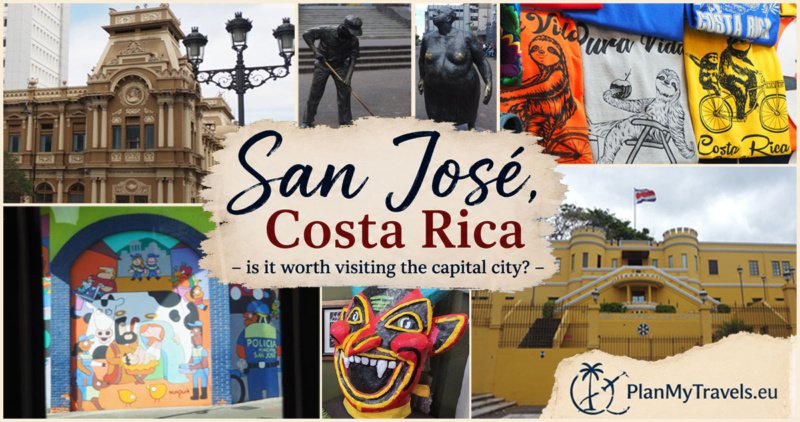
Most travellers land in San José, Costa Rica, and head straight to the coast, national parks, or the mountains. I only spent one day here, but it was enough to see that the capital has more to offer than just an airport and bus stations.
You won’t find dramatic jungle landscapes in the city itself. But you will find colonial architecture, museums, local life, and places that help you better understand everyday Costa Rica. If you have a few hours between flights or are planning a short stop, San José is worth a chance.


Fun facts about San José in Costa Rica
- San José was not always the capital of Costa Rica. In the 19th century, four cities competed for this role: San José, Cartago, Heredia, and Alajuela. San José eventually won.
- It is one of the highest situated capital cities in Central America. The city sits at around 1,170 meters above sea level, which makes the climate more pleasant than on the coast.
- People from Costa Rica call themselves “Ticos.” The nickname comes from the frequent use of the diminutive “-tico” in everyday Spanish.
- The National Theatre was funded by a coffee tax. In the late 19th century, coffee exports brought huge income. Part of that money was used to build one of the most beautiful buildings in the country.
Things to do in San José in Costa Rica
One-day walking itinerary in San José
If you only have one day in San José, walking is the best way to explore the centre. Most of the main attractions are close to each other, so it is easy to plan a comfortable walking route.
Below is a simple one-day walking itinerary in San José:
National Theatre & Plaza de la Cultura
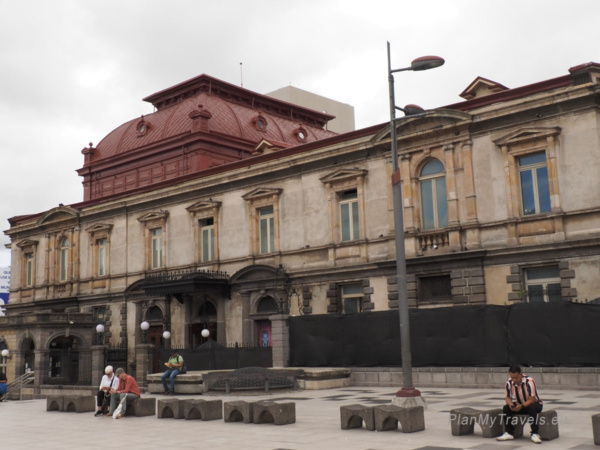
Start your walk in the city’s most representative part. The highlight here is the National Theatre, considered a symbol of San José and one of the most beautiful buildings in Costa Rica.
- Entrance ticket for guided visit: approx. 10–12 USD
- Teatro Nacional de Costa Rica
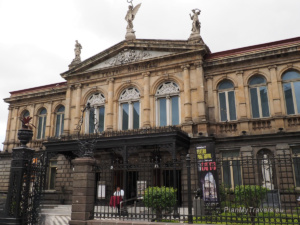
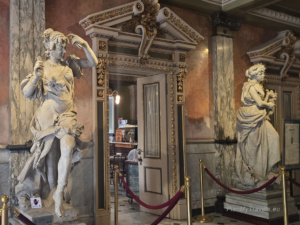
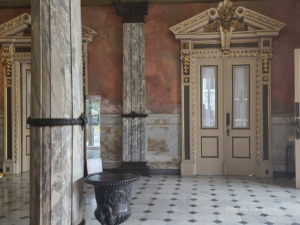
Right next to it is Plaza de la Cultura, the city’s main square and a natural meeting point for locals.

Avenida Central
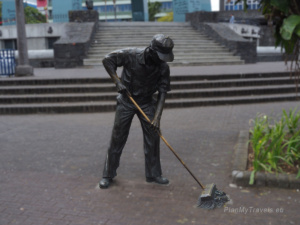
While walking along Avenida Central, look out for one of the most distinctive sculptures in the city centre — La Chola.
It is a bronze statue of a woman in a simple dress, standing in a calm and confident pose. The sculpture represents a “woman of the people” and symbolises everyday life and the strength of women who moved to San José from rural areas.
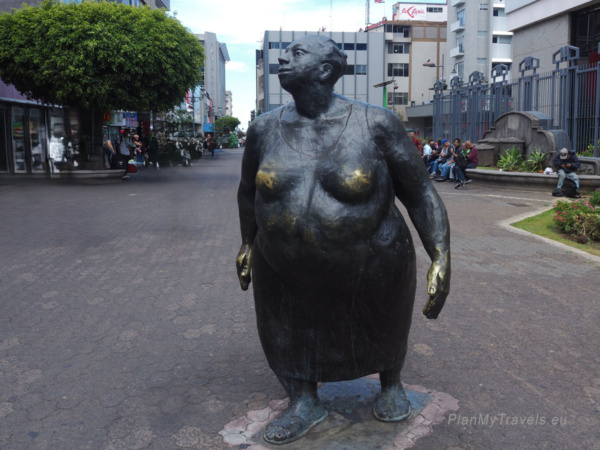
Today, it is one of the more recognisable points along the main pedestrian street. Still, it is easy to walk past without noticing it.
La Chola is not a classic tourist attraction. It is more part of the urban landscape. It fits perfectly into the atmosphere of central San José, where modern city life blends with local symbols and everyday routines.
While walking along Avenida Central, keep an eye out for a small but interesting detail — a bust of Frédéric Chopin in front of the National Theatre. It is a surprising cultural reference and a nice reminder of how international influences appear in unexpected places in San José.

Mercado Central
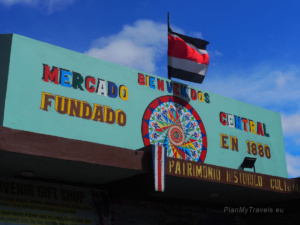
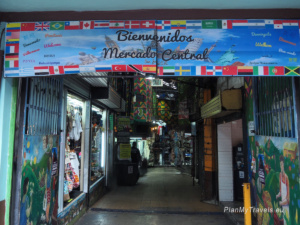
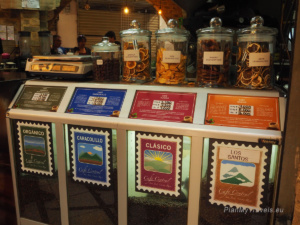
Next stop: Mercado Central, San José. It is a great place for lunch and for experiencing local life.
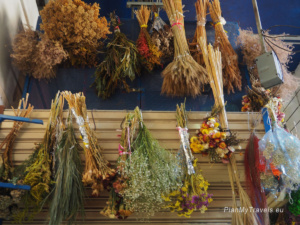
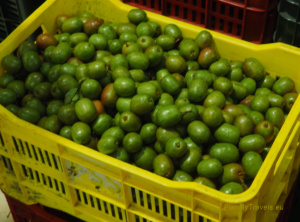
Narrow corridors, small restaurants, and market stalls create an authentic atmosphere in San José. This is something you will not find in the more touristy parts of the city.

Parque Central – the historic heart of San José
Despite its name, Parque Central feels more like a lively city square than a traditional park.
For over a hundred years, this has been a meeting point for locals. Some people rest on benches under palm trees, others watch street performers, and many simply pass through on their way across the city centre.
This is one of the most important historical spots in San José. The central square was laid out in the 19th century, and the surrounding area is still the heart of the city today. Nearby, you will find important buildings such as the Metropolitan Cathedral and Teatro Melico Salazar, making it easy to combine sightseeing.
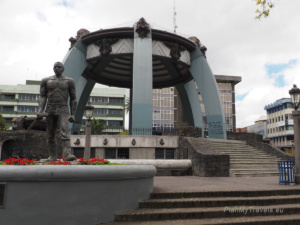
One of the most recognisable features of the square is its round Art Deco-style bandstand. Occasional concerts and cultural events still take place here. If you come in the late afternoon, look up at the palm trees — noisy green parrots often gather there, adding a tropical touch to the atmosphere.
Metropolitan Cathedral & John Paul II
The Metropolitan Cathedral in San José is not as monumental as cathedrals in some other Latin American capitals, but it plays an important role in the city’s history and daily life.
This is a place where you can slow down for a moment and see a more local side of the capital — people coming for prayer, travellers resting nearby, and a calmer rhythm just steps away from busy Avenida Central.
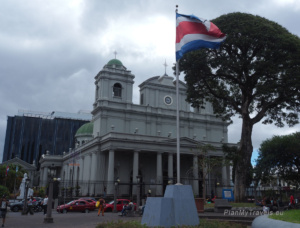
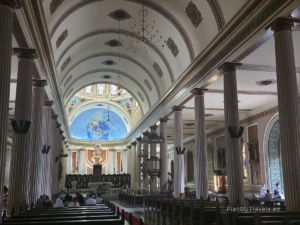
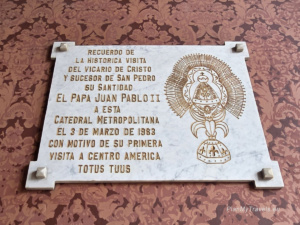
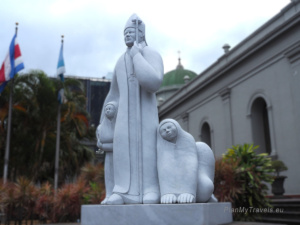
In 1983, Pope John Paul II visited the cathedral during his trip to Costa Rica. A commemorative plaque inside marks this event and notes that it was also his first visit to Central America. A statue of Pope John Paul II can also be found in the cathedral gardens.
National Museum of Costa Rica
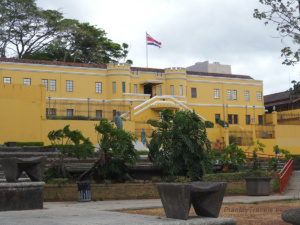
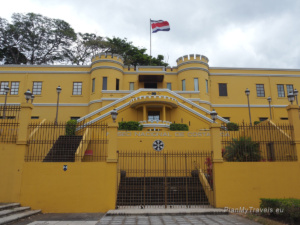
A few minutes’ walk away is the National Museum, which helps you better understand the country’s history and development.
It is a good place for slower sightseeing and a short break from the city. The museum is housed in a former military barracks. This is no coincidence—Costa Rica abolished its army in 1948, and the former military building was later transformed into a museum.
Inside, you can explore the country’s history from pre-Columbian times to the present day.
- Entrance ticket: approx. 10–12 USD
- Museo Nacional de Costa Rica
If you only have a few hours in the city, you might prefer the Jade Museum (see section below) to the National Museum — it is closer to this walking route and easier to visit.
Other interesting places in San José
I have to admit that it is often the less obvious places that stay with me the longest. When I scroll through photos from a trip, it is usually these moments that bring back the strongest memories and make me smile.
If you still feel like wandering after visiting the main attractions, it is worth adding a few more stops. Each of these places shows a different side of San José — historical, artistic, or simply more local.
Jade Museum and Pre-Columbian Culture Museum
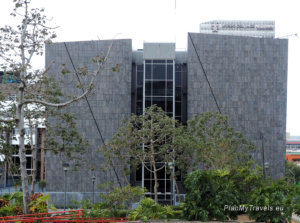
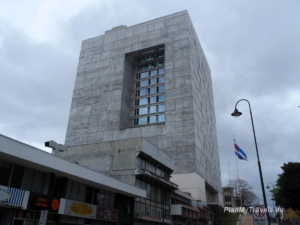
The Jade Museum is one of the most interesting museums in San José and a great option if you want to better understand Costa Rica’s history.
It houses the world’s largest collection of pre-Columbian jade artefacts. Jade was a highly symbolic stone in ancient times and carried strong religious meaning for local cultures.
Beyond finely crafted figurines and jewellery, you can also see ceramics and everyday objects used by the region’s early inhabitants.
- Entrance ticket: approx. 16 USD
- Jade Museum and Pre-Columbian Culture Museum (San José)
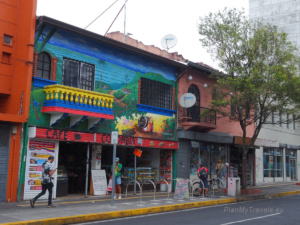
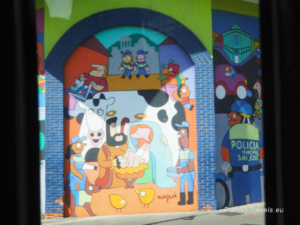
Street murals and Paso de la Vaca
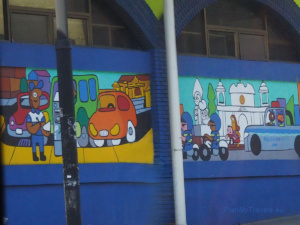
San José can also surprise street art lovers. Across the city, you will find colourful murals that reflect social themes, environmental issues, and local identity.
One of the most interesting areas is Paso de la Vaca. Here, street art has been used to revitalise the neighbourhood.
Large-scale murals give the district a completely new character. They also show that Costa Rica’s capital is not only about museums and historic buildings, but also about modern creative energy.
These artworks are part of a broader urban renewal project aimed at improving the area and reducing vandalism.
I actually came across one of these murals while driving, so the photos are not the best quality. Still, they capture the project’s unique atmosphere.


How to get around San José in Costa Rica
The good news is that most of San José’s main attractions are located relatively close to each other.
If you are spending just one day in the capital, the city centre is easy to explore on foot. Walking between Plaza de la Cultura, the National Theatre, Parque Central, Chinatown, and the National Museum usually takes only a few to several minutes.
If you want to go further or return to your hotel after dark, taxis and Uber are convenient options. Uber works in San José and is commonly used by travellers. It is still best to use only official taxis or app-based rides.
When walking around, it is worth following basic safety rules — avoid displaying valuables, keep an eye on your phone and documents, and avoid walking alone on empty streets after dark. During the day, the centre is busy and lively, and walking is the best way to feel the city’s atmosphere and observe local life.
If you plan to continue travelling through Costa Rica, San José is also the main transport hub. From here, you can easily reach almost any part of the country by bus. For many travellers, the capital becomes the natural starting point for exploring the famous Costa Rican “Pura Vida.”

Day trips from San José in Costa Rica
San José turned out to be not only a place for a short city walk, but also a great base for exploring Costa Rica. If you have more than one day, it is worth considering trips outside the capital. Within just a few hours, you can experience a completely different side of the country — from volcanoes and waterfalls to small colonial towns.
Below are three of the most popular day trips from San José that travellers usually choose.
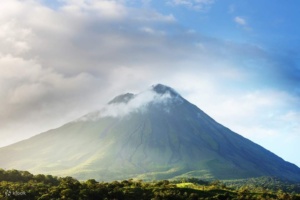
Arenal Volcano and hot springs
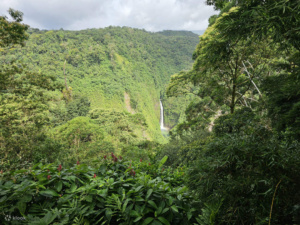
This is definitely the most intense day trip, but also one of the most spectacular. You spend most of the day on the road and around one of the country’s most famous volcanoes — Arenal.
Along the way, the landscape changes dramatically: from urban and agricultural areas to dense, tropical rainforest. The volcano’s surroundings are impressive, even if the summit is hidden by clouds.
The day often ends in natural hot springs, which is a very relaxing way to finish a long journey.
- Duration: 12–14 hours
- Highlights: Arenal Volcano
- Arenal Volcano Adventure & Hot Springs Tour*
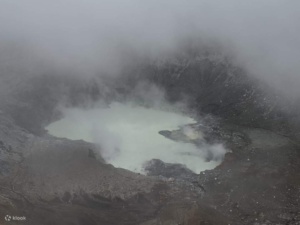
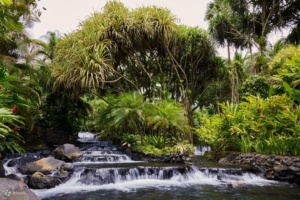
Poás Volcano, La Paz Waterfalls & coffee
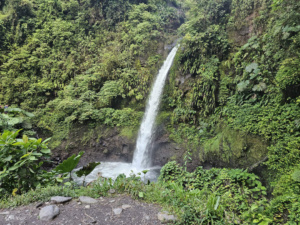
During this day trip, you can see an active volcano, visit a coffee plantation, and walk through the lush surroundings of La Paz Waterfall Gardens — all in one day.
It is a great option if you want to experience different sides of Costa Rica without spending too much time on the road. Each stop feels completely different, so the day passes quickly.
- Duration: 9–10 hours
- Highlights: Poás Volcano, La Paz Waterfall Gardens
- Poas Volcano & La Paz Waterfall & Coffee Tour*
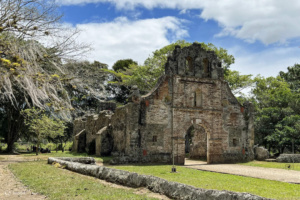
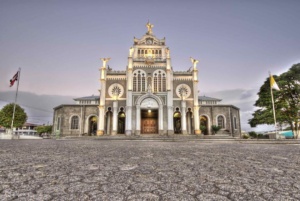
Cartago & Ujarrás
A more historical side of Costa Rica. This trip has a completely different character compared to the volcano tours.
Instead of dramatic landscapes, you get a slower pace and more local history. Cartago, the former capital of Costa Rica, offers insight into everyday life, while the ruins of Ujarrás are quiet and slightly forgotten, with a unique atmosphere.
It is a good option if you do not want to spend the whole day travelling, but still want to see something close to San José.
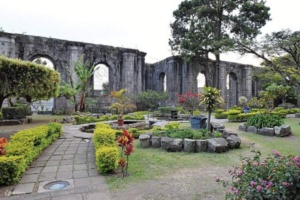
- Duration: 7–9 hours
- Highlights: Cartago, Ujarrás Ruins
- Cartago & Ujarras Ruins Tour*
Where to stay in San José in Costa Rica
Hotel Aranjuez – personal experience
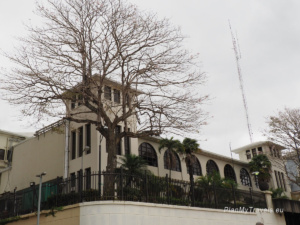
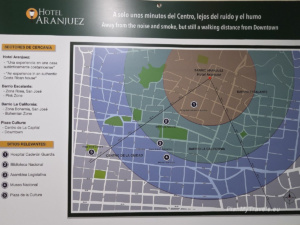
During our stay in San José, we stayed at Hotel Aranjuez, and it is one of those places that stays in your memory long after the trip.
It is not a modern, international-standard hotel, and the facilities are rather simple. But this is exactly where its charm lies.
The hotel comprises five historic houses from the 1930s, connected by long corridors and courtyards filled with tropical greenery. Wooden details and traditional Costa Rican decorations create the feeling of stepping back in time, when life moved at a slower pace.
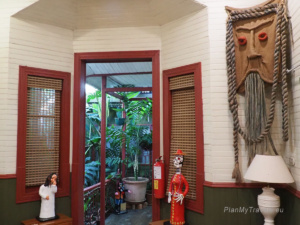
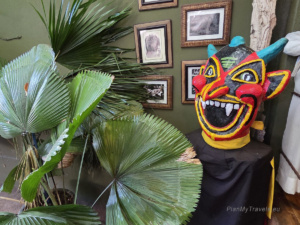
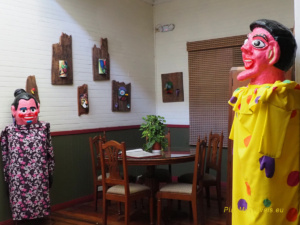
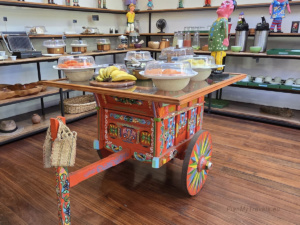
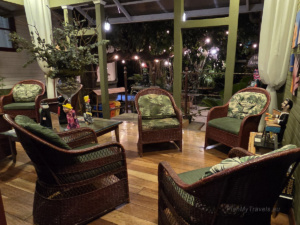
The small garden where breakfast is served every morning left the strongest impression on me. It is the perfect place to start the day with a cup of Costa Rican coffee, surrounded by fruit trees and birdsong. During our stay, we even had a curious squirrel visiting us, jumping along the railings and branches and making everyone smile.
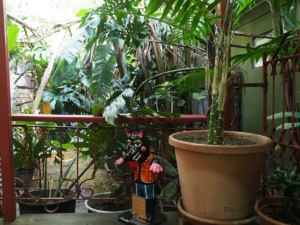
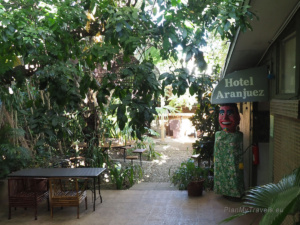
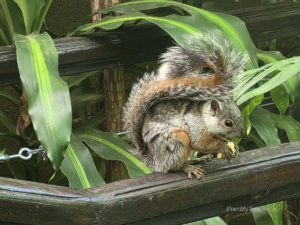
Hotel Aranjuez is more than just a place to sleep. It is a small piece of Costa Rican history and an authentic experience that lets you feel what San José was like before modern hotels took over.
Hotels with character and local atmosphere
Below are a few alternative accommodation options in San José, Costa Rica. I have not stayed in all of them personally, but they are highly rated and often chosen by travellers looking for something more unique than a standard chain hotel.
If you are wondering where to stay in San José, it is definitely worth choosing locally run hotels. Many of them are set in historic buildings surrounded by tropical greenery.
These kinds of stays often turn a short visit into part of the travel experience, rather than just a stopover on the way to somewhere else (as with my stay at Hotel Aranjuez).
Hotel Grano de Oro – boutique 4★ hotel in San José
Hotel Grano de Oro is one of the most special boutique hotels in San José. It is located in a restored Victorian mansion from the late 19th and early 20th century and combines elegance with the atmosphere of old San José.
The interiors feature wooden details, antique furniture, and colonial-style accents. Each room has its own character, making the stay feel more like a historic residence than a typical chain hotel.
A big highlight is the green courtyard and rooftop terrace with a jacuzzi, perfect for relaxing after sightseeing. The hotel also has one of the best restaurants in the city, which adds to its boutique character.
Hotel Fleur de Lys – colonial atmosphere in central San José
Hotel Fleur de Lys is set in a restored Victorian house and offers a more intimate atmosphere than standard chain hotels.
The rooms are individually decorated with local art and Costa Rican details. The overall vibe is calm and slightly colonial, which works well for a short stay in the capital.
Guests often highlight the green courtyard and tropical garden, which offer a peaceful respite from city noise.
Isla Verde Hotel – peaceful green stay near San José
Isla Verde Hotel is a good option for travellers looking for a quiet stay near San José without giving up greenery or comfort.
It has a small, relaxed atmosphere and is located in a calmer part of the city, which makes it a convenient first or last stop in Costa Rica.
It is often chosen by travellers who value peace, comfort, and easy access to the airport. The interiors are simple but well-kept, and the surrounding greenery gives a refreshing break from the city.
All of these hotels are good examples of accommodation in San José. They combine local character with comfort and good value for money.
Is San José in Costa Rica safe?
During our stay in San José, we encountered a situation worth mentioning as a cautionary note.
Right next to our hotel, there was a small restaurant, so after a full day of sightseeing, it was easy to grab dinner without going far. After the meal, one of the hotel guests went to a nearby corner shop to buy water. He paid by card and returned to the hotel.
Only the next morning did he notice an additional transaction on his card, charged shortly after leaving the shop. When he went back to ask about it, other customers were already there. The owner did not want any trouble and quickly apologised for the mistake. In the end, the incorrectly charged amount was refunded. Everything ended well, but the experience left me with a slight sense of discomfort.
I am not writing this to scare anyone. Situations like this can happen in many countries, including in Europe. Still, it is worth being cautious: use cards that allow you to quickly block transactions in an app, enable payment notifications, and carry a small amount of cash for small purchases. Sometimes paying for water or snacks in cash is simply a safer option.
Good to know
- Do not let your card out of sight. In Costa Rica, the terminal is usually brought to the customer. If a seller takes your card to a back room, it is better to insist on paying in front of you.
- Turn on push notifications for every transaction. This helps you spot suspicious charges immediately.
- Use virtual cards or cards with low limits. It is safer to top them up only with the amount you need for daily spending.
- Carry some cash. Not large amounts, just the equivalent of a few to several dozen dollars for small purchases or transport.
Is San José in Costa Rica worth visiting?
San José did not win my heart as much as Costa Rica’s beaches or rainforests. Still, I am glad I spent at least one day here. It showed me a more everyday side of the country. Small moments, like breakfast under tropical trees, often stay in memory the longest.
FAQ – San José in Costa Rica
If you are planning a trip to San José in Costa Rica, here are the most common questions:
1. Is San José in Costa Rica safe for tourists?
San José is generally safe during the day in central areas. At night, it is better to use Uber or taxis and avoid empty streets.
2. How many days do you need in San José?
Most travellers spend 1 day in San José. It is usually a stopover rather than a main destination.
3. What is San José in Costa Rica known for?
San José is known for its museums, National Theatre, local markets, and as Costa Rica’s main transport hub.
4. What is the best way to get around San José?
The city centre is walkable. For longer distances, Uber and taxis are the most convenient options.
5. Is San José in Costa Rica worth visiting?
Yes, but mainly as a short stop. It is a good introduction to the country’s culture, not a nature destination.
My other Costa Rica posts
If you are planning a trip, you might also like my other articles about Costa Rica:
*Links to the offer from Klook are affiliate links