

Nicaragua is not among the most popular destinations in Central America. Among the travellers I know, only a few have visited the country, and even fewer would choose it as their first destination in the region.
Before travelling to Nicaragua, it is easy to come across warnings about safety, political instability, border crossings, or restrictions on photographing certain locations. There is also plenty of information about active volcanoes, earthquakes, hurricanes, venomous animals, the rainy season, and areas that are best avoided.
If I had focused solely on these warnings, I might never have decided to visit Nicaragua. Yet my trip went smoothly. I crossed the border without major difficulties, travelled through much of the country, and returned home with unforgettable memories.
This doesn’t mean Nicaragua should be taken lightly. On the contrary, it is a destination worth preparing for. Understanding the basic rules, local customs, and safety recommendations before your departure can make your trip much easier and more enjoyable.
In this guide, I have gathered the most important practical information about border formalities, health, safety, transportation, money, mobile SIM cards, and everyday travel in Nicaragua. Most of the information comes from my own experience, while the rest is based on official sources and travel recommendations.
If you are planning your first trip to Nicaragua, I hope this guide will help you avoid unpleasant surprises and prepare for your journey with confidence.
Where Is Nicaragua Located?
Nicaragua is the largest country in Central America. It borders Honduras to the north and Costa Rica to the south. Thanks to its unique location, the country has access to both the Pacific Ocean on the west coast and the Caribbean Sea on the east coast.
Nicaragua lies relatively close to the Equator, so daylight hours change very little throughout the year. The sun usually sets around 6:30 PM, regardless of the season, which is worth considering when planning sightseeing or travelling between destinations.
The country is located in the UTC−6 time zone and does not observe daylight saving time. As a result, the time difference between Nicaragua and most European countries varies by season.
The capital city is Managua, located on the shores of Lake Xolotlán. It is home to the country’s main international airport and serves as the primary gateway for most visitors arriving in Nicaragua.
Nicaragua can also be reached by land through border crossings with Costa Rica and Honduras. Many travellers combine several Central American countries into a single trip, travelling between them by international bus or private vehicle.
During my journey, I entered Nicaragua via a land border crossing. Contrary to my expectations, the process was fairly straightforward, although it required some patience, several document checks, and a short walk between the border control points of both countries.
Useful Information for Travellers Arriving in Managua

Most visitors treat Managua primarily as an arrival point before continuing their journey to Granada, León, Rivas, San Juan del Sur, or other destinations across the country. However, the capital has an extensive network of urban and regional buses connecting many districts to the main bus terminals.
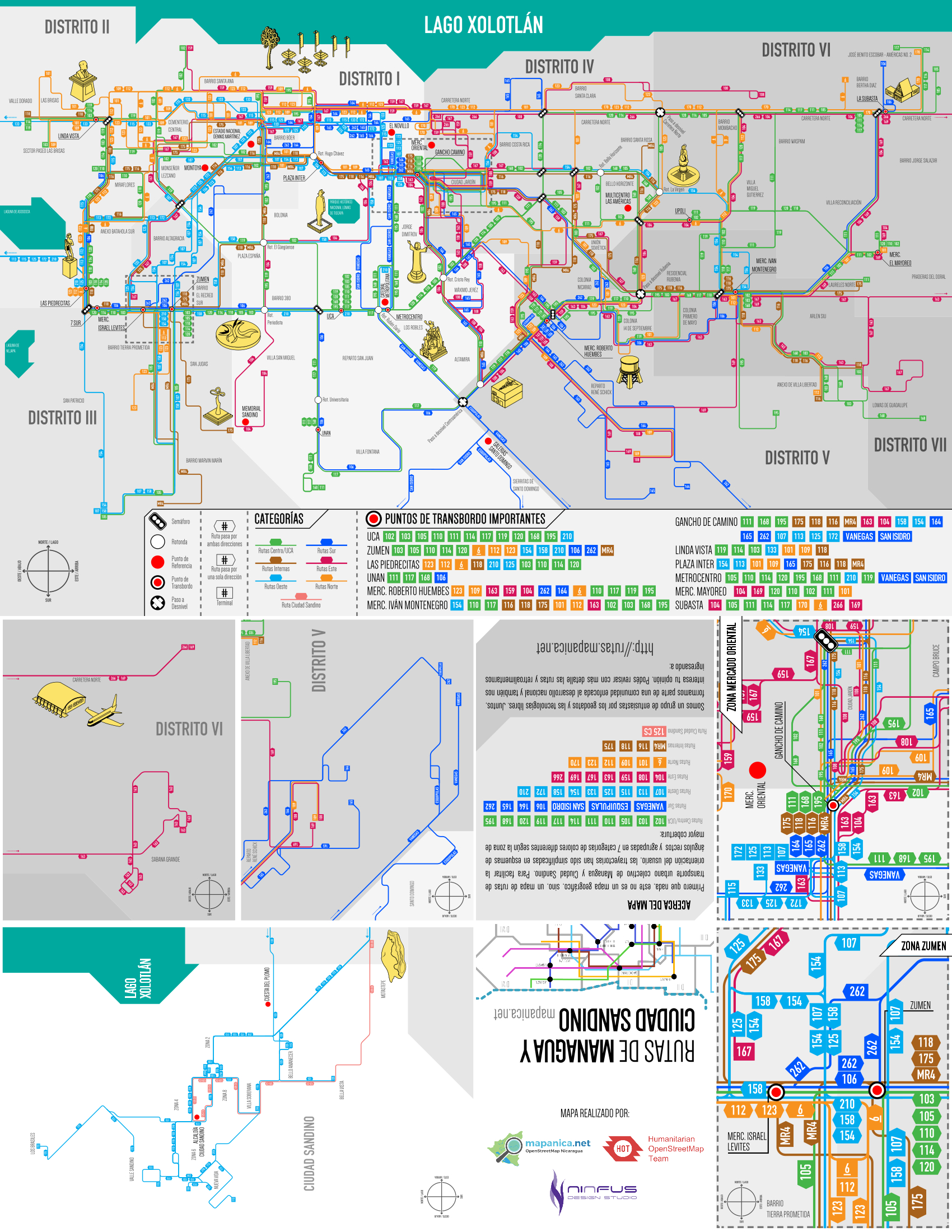
Travellers planning to use public transportation can review an up-to-date map of Managua’s public transport network before their trip. It can help you navigate the city and plan onward travel across Nicaragua.
Download the public transportation map of Managua
Visa Requirements, Entry Formalities and Border Crossing
Polish citizens travelling to Nicaragua for tourism purposes do not currently need a visa. However, entry requirements may change, so it is always worth checking the latest information before departure.
A valid passport is required to enter the country. At the time of writing, passports must remain valid for at least six months from the date of entry. Border officials may also ask travellers to present proof of onward travel or a return ticket, as well as information about their planned accommodation in Nicaragua.
Nicaragua is part of the CA-4 Agreement, which also includes Honduras, El Salvador, and Guatemala. The tourist stay limit is usually 90 days and is shared across all four countries.
If you plan to visit several Central American countries on one trip, familiarise yourself with the current CA-4 regulations before departure.
As entry requirements may change, always verify the latest information through official government sources before travelling.
Unlike many larger destinations, Nicaragua does not have a Polish embassy or a career consulate. In emergency situations, consular assistance is provided by Polish diplomatic missions responsible for the Central American region. It is also worth noting the contact details of the Honorary Consulate of Poland in Costa Rica, which is the closest Polish representation to Nicaragua.
What Is It Like to Cross the Border?

I entered Nicaragua through the Peñas Blancas land border crossing on the famous Pan-American Highway. Contrary to my expectations, the process was relatively straightforward, though it required patience, several document checks, and a few small fees.
One thing worth knowing is that part of the border crossing is done on foot. After completing formalities on one side, travellers must walk with their luggage to the immigration checkpoint of the neighbouring country. The walk takes around 20 minutes and is almost entirely exposed to the sun, so carrying water, wearing a hat, and choosing comfortable footwear is highly recommended.
Many travel reports available online still show the border crossing before its recent modernisation. Before my trip, I expected a dusty gravel road and therefore chose a backpack instead of a suitcase. In reality, a wide paved pedestrian walkway now connects both border checkpoints, making it easy to travel even with wheeled luggage.
Along the route, travellers may encounter people offering luggage transport, drinks, or currency exchange services. As at any border crossing, it is best to agree on the price in advance before using any service.
Passengers travelling on international buses also cross the border on foot. Everyone takes their luggage, passes through immigration control, pays any required fees, and reunites with the bus after completing the formalities.
Restrooms are available on both sides of the border, although the standards differ considerably. The Costa Rican side is modern, air-conditioned, and well-maintained, making it a good place to use the facilities, refill water, and take a short break before continuing the journey.
Conditions on the Nicaraguan side are significantly more basic. The buildings can be hot and humid, so carrying a large bottle of water is a good idea. During my crossing, drinking water was available near the border, but I wouldn’t assume this will always be the case.
Immediately after crossing into Nicaragua, travellers can find taxis and local buses serving destinations such as Rivas, San Juan del Sur, Granada, and Managua. If you are travelling independently, you usually don’t need to arrange transportation far in advance, as local connections are frequent and widely used by travellers.
Border Fees
One of the things that surprised me most when crossing between Costa Rica and Nicaragua was the number of small fees collected at different stages of the process.
In 2026, travellers crossing the border by land had to pay both official immigration fees and several smaller charges before reaching the main immigration building.
For this reason, I highly recommend carrying a supply of small US dollar bills. During my crossing, I was asked several times to pay USD 1 in fees before reaching the main checkpoint. The individuals collecting these payments carried identification badges but were not wearing official uniforms, which may feel unusual to first-time visitors.
In addition to these smaller payments, border authorities collected official immigration fees later in the process.
According to the regulations in force in 2026, travellers should expect fees both when entering and leaving Nicaragua through a land border crossing. As regulations and fees may change, always verify the latest information before travelling.
Most importantly, bring small US dollar bills. They can save time and make the entire process much smoother.
Restrictions on Photographic and Optical Equipment
Before travelling to Nicaragua, check the latest regulations on electronic devices, photographic equipment, and optical instruments.
Pay particular attention to professional cameras, video equipment, binoculars, spotting scopes, and other devices suitable for long-distance observation or image recording. Regulations and enforcement may change, so consult official sources before departure.
When I crossed the border, officers paid particular attention to this type of equipment. After luggage screening, officers stopped several travellers carrying binoculars or advanced optical devices for additional checks. They were asked to present the equipment, complete additional forms, and undergo further administrative procedures.
This does not mean that every camera or pair of binoculars will cause problems when entering Nicaragua. However, travellers carrying such equipment should expect additional inspections and longer border procedures.
Nicaragua also restricts photographing certain government facilities and security services. Before taking photos near government buildings, police stations, or military installations, check that no local restrictions apply.
I would also strongly recommend checking the latest regulations before bringing a drone to Nicaragua. Flying a drone without the required authorisation may result in equipment confiscation and significant financial penalties.
Useful Links
- UK Foreign Travel Advice for Nicaragua
- S. Department of State Travel Advisory for Nicaragua
- Official Nicaraguan Immigration Authority
Safety in Nicaragua
Safety was one of my biggest concerns before travelling to Nicaragua. Many Western governments, including the United States and the United Kingdom, publish travel advisories highlighting political tensions, demonstrations, restrictions on civil liberties, and other potential risks.
Media reports often focus on economic difficulties, political unrest, and security concerns. Before my trip, I came across many warnings that made Nicaragua seem far more intimidating than most other Central American destinations.
Does that mean Nicaragua is unsafe for tourists?
In my opinion, the answer is not straightforward. Nicaragua is not a destination to visit without preparation or awareness of local conditions. At the same time, I never encountered anything during my trip that made me feel personally threatened.
The key to safe travel in Nicaragua is following local advice, avoiding problematic areas, and using common sense.
Political Situation
When preparing for the trip, one topic that came up most often was Nicaragua’s political situation. Many countries advise travellers to remain cautious because of possible demonstrations, restrictions on civil liberties, and the visible presence of government authorities.
Throughout my journey, guides repeatedly reminded us to avoid public demonstrations, political gatherings, and photographing government facilities, police, or military personnel. They also recommended exercising caution near government buildings and locations where political events might take place.
I did not visit Managua, Nicaragua’s capital city. This was partly due to recommendations from local organisers and partly because many government institutions are located there.
Most visitors to Nicaragua focus instead on places such as Granada, León, Ometepe, or the Pacific coast, where most tourist attractions and tourism infrastructure are located.
Demonstrations and Public Gatherings
Official travel advisories recommend avoiding demonstrations, political rallies, and large public gatherings.
Situations can change quickly, so it is generally best not to remain near such events or photograph participants, police officers, or security operations.
During my stay, local guides repeatedly advised travellers not to engage in political discussions and simply avoid areas where large groups of people had gathered.
It is also worth remembering that some religious and national celebrations involve processions and public events that may temporarily disrupt traffic.
Safety After Dark
One of the things that surprised me most in Nicaragua was how quickly darkness falls.
Because the country lies close to the Equator, the sun sets around 6:00 PM year-round. In practice, this means it becomes almost completely dark between 6:00 PM and 6:30 PM.
Many official travel advisories recommend limiting travel after dark, especially outside major cities. This is not solely because of crime. Road conditions are often a more significant concern. Outside urban areas, roads may be poorly lit or completely unlit, and you may encounter pedestrians, cyclists, motorcyclists, and livestock sharing the roadway.
I experienced this firsthand on Ometepe Island.
One evening, while returning from a walk through a local park, we failed to notice how quickly sunset approached. At first, we followed a dirt road through a wooded area. Within minutes, it became almost completely dark.
That was the moment I truly realised I was in a tropical country inhabited by scorpions, tarantulas, venomous snakes, and many other creatures that Europeans rarely encounter during an evening walk.
Ironically, I was not worried about people. I was worried about accidentally stepping on an animal before noticing it.
After leaving the park, we reached the road leading back to our hotel. There was no sidewalk, only a narrow concrete shoulder. It was used not only by pedestrians but also by local residents riding horses and herding cows and goats back home.

Nobody in our group wanted to walk on the road itself, so we stayed on the shoulder with the animals and local residents.
It wasn’t dangerous, but it clearly showed how different nighttime travel in Nicaragua can be compared to what many European travellers are used to.
After that evening, I tried to plan activities so I could return to my accommodation before sunset.
Photography and Optical Equipment
Visitors should exercise caution when photographing government buildings, police facilities, or military installations.
If you are uncertain whether photography is permitted, it is usually best to ask first or simply avoid taking pictures.
Travellers carrying professional photography equipment, binoculars, spotting scopes, or drones should review current regulations before departure. Such equipment may attract additional attention during border crossings and result in more detailed inspections.
Crime and Everyday Safety
During my trip, I did not experience any dangerous situations or attempted thefts.
However, this does not mean that basic safety precautions should be ignored. As in many other Latin American countries, it is sensible to avoid displaying large amounts of cash or expensive equipment and never leave belongings unattended.
Road Safety
When travelling around Nicaragua, it quickly becomes apparent that road conditions differ from those in Europe.
Main roads are generally in good condition, but outside major urban areas the situation can change rapidly. Pedestrians, cyclists, motorcyclists, horse riders, animal-drawn carts, and livestock are all common sights on or beside the road.
For locals, this is everyday life. For visitors, it can be quite surprising.
Use extra caution outside cities and after dark. Many roads lack street lighting, and obstacles such as speed bumps, parked vehicles, pedestrians, and animals can be difficult to spot.
Nicaragua’s tropical climate can also disrupt even the best-planned itinerary.
I experienced this on Ometepe Island while returning from an excursion. Our group was travelling in two minibuses along the road circling the island. The first vehicle passed without incident, but only seconds later, a large tree collapsed directly onto the road in front of our bus.
The trunk completely blocked the roadway.

Fortunately, nobody was injured. We had to leave the vehicle, pass beneath the branches, and wait while the drivers searched for a way around the obstruction.
At that moment, we could only be grateful the tree hadn’t fallen a few seconds earlier.
It was a powerful reminder that in Nicaragua, nature can sometimes be a greater challenge than traffic itself. Strong winds, heavy rain, and weakened trees can change travel plans in an instant.
Beaches, Hiking and Outdoor Activities
One of Nicaragua’s greatest strengths is its proximity to nature. Volcanoes, beaches, islands, lakes, and tropical forests mean that visitors spend much of their time outdoors rather than inside hotels or cities.
These natural attractions often provide the most memorable moments of a trip, but they also require common sense and preparation.

Many attractions are located far from major urban centres. If you are injured or have a medical emergency, help may take much longer to arrive than in Europe or North America. When heading out on excursions, carry enough water, a fully charged phone, and basic first-aid supplies.
For volcano hikes and activities in remote areas, hiring a local guide is often recommended. In some locations, including climbs of Concepción and Maderas volcanoes on Ometepe Island, guides may be mandatory or strongly encouraged.

Nicaragua is also a tropical country. In addition to the more familiar risks associated with heat and dehydration, travellers should be aware that snakes, scorpions, tarantulas, and other wildlife inhabit parts of the country. Most of these animals avoid human contact, but the chance of encountering them increases during nighttime walks or when leaving marked trails.
Caution is also advisable near the water. Nicaragua is known for its beautiful and often uncrowded beaches, but swimming conditions are not always ideal. Some beaches have strong currents, and lifeguards are not always present. Before entering the water, pay attention to local warnings and watch where local residents swim.
The same principle applies to water sports, diving, and surfing. In more remote regions, access to specialised medical care can be limited, so match the risk level to your experience and abilities.
Safety – Have a Backup Plan
Most trips to Nicaragua go smoothly. Nevertheless, it is worth preparing a basic contingency plan before departure.
A good starting point is making copies of important documents and saving local emergency numbers:
- Police: 118
- Ambulance: 128
If you plan to trek, dive, surf, or do other activities in remote regions, make sure your travel insurance provides adequate coverage.
My Experience
Before visiting Nicaragua, safety was one of my biggest concerns. The more government advisories and travel reports I read, the more uncertain I became about what to expect.
After returning home, I can honestly say that reality was more nuanced than many online warnings suggested.
During my entire trip, I never experienced violence, aggression, or attempted theft. That does not mean caution is unnecessary. Rather, Nicaragua is a destination where preparation and awareness matter.
I wouldn’t travel there without a plan, but I wouldn’t consider it significantly more dangerous than many other Latin American countries.
What surprised me most was that many situations requiring caution had little to do with crime. More often, they were connected to nature, infrastructure, road conditions, or the rapid onset of darkness after sunset.
Those factors influenced my daily travel decisions far more than concerns about personal security.
Health, Vaccinations and Medical Care
Before travelling to Nicaragua, it is worth spending a little time preparing for the health-related aspects of the trip.
This is not about reading frightening stories about exotic diseases, but about making sure you are properly prepared for travel in a tropical climate.
A consultation with a travel medicine specialist a few weeks before departure can be useful. This visit lets you review your vaccination status, discuss your itinerary, and prepare a travel health kit suited to local conditions.
It is also worth checking that routine vaccinations are up to date and reviewing current medical recommendations for Nicaragua. For most travellers, this is standard preparation for long-haul travel outside Europe or North America.
Mosquitoes, Sun Exposure and Prevention
Before arriving in Nicaragua, I expected mosquitoes to be a much bigger problem than they actually turned out to be.
Throughout the trip, I encountered relatively few mosquitoes and mostly noticed them in the northern parts of the country.
Many accommodations had screened windows, and mosquito nets were often provided above the beds. Even so, I would recommend bringing a good insect repellent and a plug-in mosquito deterrent for use at night, especially when staying close to nature.
A much greater challenge for me was the tropical sun.
A high-SPF sunscreen should be considered essential travel equipment. During my trip, I also bought a locally available SPF 85 sunscreen, which proved extremely useful in Nicaragua’s hot, humid climate.
Staying hydrated is equally important, especially during hikes, city walks, and other activities that involve prolonged sun exposure.
Water, Food and Digestive Problems
One of the simplest and most important rules in Nicaragua is to drink only bottled water.
Throughout my stay, I never drank tap water. Bottled water was readily available at every accommodation, usually from the reception desk or hotel restaurant. Even in more remote hotels, obtaining hot water for a thermos was never a problem.
I also used bottled or boiled water when brushing my teeth.
Another habit I follow while travelling is avoiding ice in drinks. In many countries, including Nicaragua, it is difficult to know whether the ice was made from safe drinking water. Following this simple rule can prevent many unnecessary stomach problems.
The same caution applies to fruit. It is safest to choose fruits you can peel or eat without contact with tap water. Do not wash fruit with untreated tap water.
That does not mean avoiding local cuisine. Quite the opposite. I happily tried many local dishes during my trip and experienced no significant health problems. Basic common sense goes a long way.
Travel Medical Kit
A well-prepared travel medical kit can save a great deal of inconvenience and help avoid unnecessary visits to clinics or pharmacies.
Alongside any personal medications, it is worth packing painkillers, fever-reducing medication, bandages, antiseptic products, insect repellent, and sunscreen.
During my trip, I learned that even a carefully prepared medical kit can miss something important. I found myself needing medication commonly used for bacterial digestive problems and was fortunate that another traveller had some available.
The medication worked quickly and allowed me to continue the day without major disruption.
Since then, gastrointestinal medication has become a permanent part of my travel medical kit. It is inexpensive, lightweight, and can make a big difference when needed.
Medical Care and Pharmacies
I didn’t need medical treatment during my trip, but I visited local pharmacies several times.
In both León and Granada, pharmacies were modern, well organised, and easy to find. Some staff members spoke basic English, and most common travel-related products were readily available.

For everyday needs, local pharmacies are usually sufficient. Travellers can purchase basic medicines, first-aid supplies, and personal care products. I bought the SPF 85 sunscreen mentioned earlier at one of these pharmacies. For more serious health issues, the situation is different.
The country’s best-equipped medical facilities are concentrated in Managua. One of the most respected private hospitals is Hospital Vivian Pellas, the only hospital in Nicaragua accredited by Joint Commission International (JCI).
Travellers should be aware that private hospitals often require payment in advance and that medical treatment can be expensive. Complex procedures or specialist care may require transfer to Managua.
Travel Insurance
If there is one thing I would strongly recommend not saving money on before a trip to Nicaragua, it is travel insurance.
A good policy should cover not only medical treatment but also medical transportation and emergency evacuation. This includes unexpected health issues as well as natural events such as earthquakes, hurricanes, and other emergencies.
This is especially important in a country where many attractions are far from major cities and the most advanced medical care is concentrated in Managua.
The cost of comprehensive travel insurance is only a small part of the overall travel budget, yet it may be one of the most valuable investments you make before departure.
Useful Links
- CDC Travellers’ Health – Nicaragua
Current health recommendations, vaccination guidance, and information about diseases present in the country. - UK Foreign Travel Advice – Nicaragua (Health)
Information about healthcare, insurance, and health-related travel advice. - Hospital Vivian Pellas
One of the leading private hospitals in Nicaragua and the only hospital in the country accredited by Joint Commission International (JCI).
Currency and Payments – What Money Should You Bring to Nicaragua?
The official currency of Nicaragua is the córdoba (NIO). However, US dollars are also widely used throughout the country, and in practice it is worth carrying both currencies.

Before my trip, I exchanged a small amount of córdobas and arrived in Nicaragua already carrying some local cash. This proved useful from day one, especially for small purchases and local transportation.
US dollars are widely accepted, particularly in hotels, during organised tours, and for larger purchases. However, paying in dollars isn’t always the best option. Change is often returned in córdobas, and the seller’s exchange rate may not be advantageous.
Small denominations such as USD 1, 5, 10, and 20 bills were the most useful. It is also worth bringing clean, undamaged notes, as older or worn bills may not always be accepted.
Cash or Card?
Before visiting Nicaragua, I assumed that I would pay for most things with a card or mobile phone. The reality was a little more complicated.
Hotels, restaurants, and larger businesses generally accepted international debit and credit cards without difficulty. Many places also offer contactless mobile payments.
At the same time, cash remains very important. Street vendors, local markets, small shops, and many independent businesses often accept cash only.
The most practical solution is to use a combination of payment methods. A payment card, some US dollars, and local currency complement one another and offer flexibility in different situations.

Currency Exchange
One of the more memorable experiences during my trip involved exchanging money outside the main tourist areas.
When I needed more córdobas, our guide arranged an exchange in a way I never would have chosen on my own. The bus stopped near a bank, and a large man carrying a thick stack of banknotes stepped inside. After a quick calculation, travellers exchanged dollars for local currency at a previously agreed rate.
The entire process seemed calm and routine to locals.
I wouldn’t recommend this to independent travellers. However, it shows how life outside Nicaragua’s main tourist centres can feel far more local and informal than visitors expect.
ATMs
I rarely used ATMs during my trip, although I encountered them regularly in larger cities and tourist destinations.
If you plan to spend time on Ometepe Island or in more remote regions, withdraw enough cash in advance. I wouldn’t assume an ATM will always be available exactly when you need one.
It is also wise to carry two independent payment cards. ATM failures, blocked transactions, or other technical issues can happen during any trip, so having a backup option provides additional peace of mind.
Internet and Mobile Phones
Before travelling to Nicaragua, I purchased a Claro eSIM, which proved to be a very convenient solution. For most of the trip, it worked without significant problems, letting me use maps, messaging apps, and everyday online services without worrying about excessive roaming charges.
Most hotels also offered Wi-Fi access.
Before departure, check your provider’s international roaming rates. Mobile data, calls, and text messages can be considerably more expensive in Nicaragua than travellers expect. If you don’t plan to use a local SIM card or eSIM, consider buying an international roaming package or disabling mobile data altogether to avoid unexpected charges.
Nicaragua’s geography is highly varied, and not every region has reliable mobile coverage. In the mountains, canyons, and remote forest areas, I encountered places with no signal at all. This wasn’t limited to one operator; other travellers’ phones also lost connectivity there.
If you plan to hike or explore less-visited parts of the country, download offline maps in advance.
Key Things to Remember
- Do not rely on a single payment method.
- Carry a combination of payment cards, US dollars, and local currency.
- Make sure your phone has a functioning SIM card or eSIM, but remember that coverage can be limited in some regions.
How to Travel Around Nicaragua?
Nicaragua is not a particularly large country, so travelling between the main attractions usually doesn’t require long journeys.
During my trip, I mainly relied on transportation arranged by a local tour operator. However, independent travellers have several options.
You can travel around Nicaragua by public buses, long-distance coaches, tourist shuttle services, rental cars, taxis, and other local transport. Certain routes also require ferry crossings.
The best option largely depends on your budget, available time, and preferred travel style.
Organized Transportation
During my stay, I primarily used transportation arranged by a local operator. This proved to be a very convenient solution, especially because the itinerary included destinations located in different parts of the country.
The main advantage of organised transport is that you don’t need to plan connections, arrange transfers, or navigate local transportation systems.
Drivers know local conditions well, and guides can help resolve any logistical challenges along the way.
It is not the cheapest way to travel, but for a shorter visit, it can save considerable time.
Public Buses and Chicken Buses
The most iconic form of transportation in Nicaragua is undoubtedly the famous chicken bus.
These colourful vehicles are former American school buses that found a second life in Central America after years of service in the United States.
Bright paintwork, luggage strapped to the roof, and crowded interiors have turned them into one of the region’s most recognisable symbols.

During my travels, we stopped for lunch in the town of La Dalia, where I had the opportunity to observe a local bus terminal up close.
The number of people, buses, shops, and market stalls was astonishing. There was constant activity everywhere. Vendors sold goods through bus windows, passengers loaded luggage, drivers prepared for the next departures, and traders, residents, and travellers moved continuously between the vehicles.
At first glance, it looked like complete chaos.
After a few minutes, however, I realised that everything functioned surprisingly efficiently.
The bus terminal was much more than a transportation hub. It was also a marketplace, a shopping area, and a social gathering point. You could buy almost anything there, from food and fruit to clothing, household items, and even livestock feed.

During our stop, I met two German travellers who were exploring Nicaragua entirely by local buses. They told me they had reached every destination they wanted to visit without any major difficulties.
Their experience reinforced my impression that, with a little patience, Nicaragua’s public transportation network makes it possible to see much of the country.
Long-Distance Buses
Contrary to popular belief, Nicaragua’s transportation system is not limited to traditional chicken buses.

More modern, air-conditioned long-distance coaches are becoming increasingly common and offer a far more comfortable experience on longer journeys.
I frequently saw these buses operating on major routes connecting larger cities. For travellers planning long-distance journeys or carrying more luggage, they can be a much more comfortable alternative.

In recent years, Nicaragua has also invested in modernising its public transportation system by introducing newer urban and regional buses. Alongside traditional vehicles, modern buses designed to improve passenger comfort are becoming increasingly common.
Popular Routes Mentioned in This Guide
If you are planning your trip independently, these are some of the most popular routes connecting destinations mentioned throughout this guide:
Car Rental
Renting a car is a popular option among travellers who value complete independence.
Its greatest advantage is the flexibility to create your own itinerary and visit destinations beyond the main tourist routes. Distances between the country’s major attractions are relatively short, making self-driving both practical and time-efficient.
At the same time, I do not think a rental car is essential.
Based on conversations with other travellers and my observations of the local transportation system, Nicaragua appears perfectly manageable without having your own vehicle.
Taxis, Tuk-Tuks and Local Transportation
Taxis are widely available in larger cities, and in some towns you can also find tuk-tuks and other forms of local transportation.
For short journeys around town, they are often the fastest and most convenient way to reach attractions, bus stations, or accommodations.
As with transportation anywhere in the world, it is always wise to agree on the fare in advance or confirm that the driver is using the standard rate.
Ferries and the Crossing to Ometepe
One of the most memorable transportation experiences of my trip was the ferry crossing to Ometepe Island.
Ometepe is one of Nicaragua’s most famous destinations, and ferry transport is the only practical way of reaching the island.
The ferries carry not only tourists but also local residents, cars, motorcycles, and goods needed for everyday life on the island. As a result, the journey itself offers a fascinating glimpse into how important Ometepe is to the surrounding region.
For many travellers, the ferry ride is also the first opportunity to admire the island’s distinctive volcanoes rising above the waters of Lake Nicaragua.

Useful LINKS
- NicaBuses – a useful directory of bus routes, terminals, approximate ticket prices, and travel times throughout Nicaragua. Particularly helpful for independent travellers planning their own itineraries.
- Granada Bus Info – practical information about bus routes, terminals, and frequently asked questions related to public transportation in Nicaragua.
Accommodation and Choosing Where to Stay
During my trip to Nicaragua, I stayed in hotels in city centres and in small properties hidden deep in cloud forests or on Ometepe Island.
I quickly realised that accommodation in Nicaragua is often part of the travel experience, not just a place to sleep.
Each property had its own character. In Granada, it was the city’s colonial architecture and atmosphere. On Ometepe, it was the lake’s proximity. In the cloud forest, it was the constant connection with nature.
Not every stay was perfect, and some places reminded me that Nicaragua is still a developing country, and accommodation standards don’t always match European expectations.
One thing that may surprise first-time visitors is the lack of hot water. Throughout my trip, I rarely encountered truly warm showers, regardless of the accommodation standard. Fortunately, in the tropical climate, this was never a major issue.
Rather than ranking the best and worst hotels, I decided to describe the places where I personally stayed.
My hope is that readers can decide not which accommodation is objectively best, but which one they would most like to experience themselves.
Chico Largo, Ometepe
Chico Largo was one of the most beautifully located places I stayed during my entire trip.
Situated directly on the shores of Lake Nicaragua, the property is surrounded by a well-maintained garden full of tropical plants and flowers. Hammocks hanging outside the rooms invite guests to slow down and relax, while a small on-site kitchen serves simple but delicious home-style meals.
The greatest strength of this place was undoubtedly its atmosphere and location.
Here, I truly felt the spirit of Ometepe.


The rooms were simple and modestly furnished, but here the surroundings mattered far more than the accommodation itself. The lake, the gardens, and the island’s unique character made this one of my favourite stays in Nicaragua.
Property website: Chico Largo, Ometepe
Socialtel Granada
Socialtel Granada was one of my favourite accommodations of the entire journey.

The hotel occupies a beautiful colonial building with a spacious inner courtyard filled with tropical plants, a small swimming pool, a restaurant, and numerous relaxation areas.
Granada’s historic atmosphere became apparent the moment I stepped through the entrance.


One small surprise was that some members of our group received windowless rooms. For many European travellers, that may feel unusual. In practice, however, it did not matter much because we spent most of our time exploring the city or relaxing in the hotel’s common areas.
An additional highlight was visiting during Holy Week.
Each evening, a local family band performed on the hotel terrace, creating an atmosphere that no guidebook or travel brochure could fully capture.

If I ever return to Granada, I would gladly stay there again.
Property website: Socialtel Granada
La Sombra Ecolodge, Peñas Blancas
La Sombra Ecolodge was the most unusual place I stayed during my entire trip. Calling it a hotel does not quite feel right. It is more like a small nature retreat hidden inside a cloud forest. Wooden cabins are surrounded by lush vegetation, walking trails, elevated boardwalks, and hammocks scattered throughout the property.


The rooms were simple and entirely wooden, with mosquito nets hanging above the beds. The humid cloud-forest atmosphere was constant and felt like a natural extension of the surroundings. Yet the rooms themselves were not the real attraction.


During our stay, we saw small green frogs with distinctive red eyes, visited a butterfly garden, learned about local chocolate production, and bought freshly roasted coffee from nearby plantations.

Banana plants grew next to the cabins, cats wandered freely around the grounds, and squirrels regularly appeared on the terraces.
This place left me with some of the most memorable experiences of the entire trip.
Property website: La Sombra Ecolodge, Peñas Blancas
Gabriel’s Cabins, Somoto
Gabriel’s Cabins is a family-run property located near Somoto Canyon. The owners organise home-cooked meals, canyon excursions, and evening campfires accompanied by local music.
Accommodation standards varied depending on the room assigned, but what I remember most is the hosts’ kindness and the welcoming atmosphere they created around the property.


After returning home, I discovered photos and videos from our stay on their social media profiles. The hosts spoke warmly about the Polish travellers they had welcomed and invited us to return.
That small gesture ensured that my memories of Gabriel’s Cabins are defined above all by the people I met there.
Property website: Gabriel’s Cabins, Somoto
Hotel Austria, León
Hotel Austria offered the highest accommodation standard of all the places where I stayed in Nicaragua.
The rooms were spacious, well equipped, and included many comforts familiar to European travellers. For the first time during the trip, I found amenities such as a television, a desk, chairs, and even a hairdryer in the bathroom.
The property also featured a large green courtyard, a restaurant, a spacious reception area, a souvenir shop, and several relaxation areas with hammocks.


Its excellent location made exploring León convenient and enjoyable.
Among all the accommodations I experienced in Nicaragua, this was undoubtedly the most comfortable and best equipped.
Property website: Hotel Austria, Leon
Weather, Climate and the Best Time to Visit Nicaragua
I visited Nicaragua in late March and early April, near the end of the dry season. This is also one of the hottest periods of the year.
Before my trip, I expected high temperatures, but the reality proved even more demanding.
During my entire stay, it did not rain once. In many places, I noticed trees that had lost their leaves and landscapes that resembled late autumn more than the tropical scenery I had expected. This clearly signalled that the dry season was ending and the rainy season was approaching.
Dry Season and Rainy Season
Nicaragua’s climate can be broadly divided into two seasons.
The dry season typically lasts from November or December until April. This is also the most popular period for tourism, as the weather is generally stable, sunny, and rainfall is rare. The rainy season usually begins in May and continues until October or November.
However, that does not necessarily mean constant rain. According to local people I spoke with, showers often occur in the afternoon or evening, while much of the day remains dry and pleasant.
What Was the Climate Like in Practice?
The biggest surprise for me was the intensity of the tropical sun.
In cities, I quickly noticed that both locals and tourists naturally walked on whichever side of the street offered shade.
Drinking water regularly was absolutely essential. Even water carried in a backpack for a short time warmed up quickly in the heat, so we frequently bought cold drinks from shops and street vendors.
The most comfortable time for sightseeing was early morning and late afternoon. Around midday, when the sun reached its highest point, exploring became noticeably more exhausting.
Another thing to remember is that temperatures stay high even after sunset. In the warmest regions of Nicaragua, nights stayed very warm, and temperatures dropped only slightly.
Nicaragua Is Not Just About Heat
One of the biggest surprises was the country’s climatic diversity.
The mountain regions and cloud forests felt completely different from the lowlands. Temperatures were more comfortable, light rain fell from time to time, and cool winds were common in some places.
In those conditions, I was very happy to have a light sweatshirt and a thin scarf with me. It was the first time during the trip that I felt grateful for packing something warmer than a short-sleeved T-shirt.
How to Prepare for Nicaragua’s Climate
The most useful items during my trip were:
- high-SPF sunscreen,
- sunglasses,
- a hat or cap,
- lightweight clothing covering arms and legs,
- a reusable water bottle,
- a light jacket or sweatshirt for mountain areas and cloud forests.
If you are visiting toward the end of the dry season, do not underestimate the strength of the sun. Even relatively short walks can be far more tiring than expected.
When Is the Best Time to Visit Nicaragua?
If your priority is stable weather and the lowest chance of rain, the dry season is generally the best choice.
However, March and April are among the hottest months of the year. Travellers who struggle with intense heat may feel more comfortable earlier in the dry season or shortly after the rainy season begins.
Regardless of when you visit, it is worth preparing for a wide variety of conditions.
On the same day, you may experience tropical heat in the lowlands and significantly cooler, wetter weather in mountainous regions.
What Should You Pack for Nicaragua?

Before travelling to Nicaragua, I relied on my standard travel packing list that has served me well on many previous trips. After returning home, I can honestly say almost everything I packed was useful.
I travelled with a relatively small backpack, so I focused on lightweight, practical, and multifunctional items. Nicaragua doesn’t require specialised equipment, but a few things significantly improved my comfort throughout the journey.
Clothing
I visited during the hottest part of the dry season. Surprisingly, lightweight clothing that covered my skin proved more useful than shorts and sleeveless tops.
The items I wore most often were:
- lightweight hiking trousers,
- a long-sleeved hiking shirt,
- quick-drying sports shirts,
- a hat or cap,
- sunglasses.
Long sleeves provided protection from both the sun and insects. In practice, they were much more comfortable than exposing my skin to tropical sunshine throughout the day.
I would also recommend bringing a light sweatshirt or scarf. Most of the country is very hot, but mountain regions and cloud forests can be cool, windy, and damp.
Footwear
If I had to choose one item you should never forget, it would be comfortable footwear.
The most useful options were:
- lightweight hiking shoes,
- water-friendly trekking sandals.
The sandals were especially helpful when crossing rivers, walking through water, and navigating slippery rocks. Hiking shoes proved invaluable on muddy trails, roots, stones, and uneven terrain.
Sun and Insect Protection
Nicaragua can be even sunnier than many travellers expect.
I would strongly recommend packing:
- high-SPF sunscreen,
- sunglasses,
- a hat or cap,
- insect repellent.
If I visited Nicaragua again, I would bring stronger sunscreen from the start. Forgetting it is not a disaster, as you can buy suitable products locally without much difficulty. I did not bring a mosquito net. Instead, a plug-in mosquito repellent worked extremely well and provided effective protection during overnight stays.
Travel Medical Kit
My travel medical kit always includes basic painkillers, insect bite treatments, and any medications I use regularly. After this trip, I would add one more essential item: medication for bacterial digestive problems. It was the only thing I genuinely missed while travelling in Nicaragua.
Doing Laundry While Travelling
Since I was travelling with a backpack, I packed limited clothing and washed laundry regularly.
Three items turned out to be particularly useful:
- laundry detergent sheets,
- a travel clothesline with built-in clips,
- a waterproof dry bag.
I originally bought the dry bag to protect electronics and documents during water activities, but it quickly became my portable washing machine. All it took was water, a detergent sheet, and a few minutes of hand washing.
You could attach the travel clothesline almost anywhere: between trees, on balconies, or along fences. Most clothes hung out in the evening were completely dry by the following morning.
In tropical climates, drying laundry outdoors works much better than drying it indoors. Clothes left in bathrooms often remain damp and quickly develop a musty smell.
Toiletries and Everyday Essentials
I would recommend bringing your own:
- hand soap,
- shower gel,
- shampoo,
- travel towel.
Many accommodations I stayed in didn’t provide these items.
Towels were usually available, but their quality varied considerably, so my quick-dry towel was one of the most useful things I packed.
Other useful items included:
- tissues,
- a small supply of toilet paper,
- zip-lock bags in various sizes.
Easily Forgotten Items
Several seemingly insignificant items turned out to be extremely useful:
- a type A/B power adapter,
- a headlamp,
- a flashlight,
- earplugs,
- a sleep mask,
- a small hand towel.
The power adapter was essential throughout the trip because Nicaragua uses different electrical outlets than many European countries. Flashlights came in handy regularly outside larger cities and during evening activities.
Earplugs helped whenever air conditioning units were noisy or street noise carried into the room at night. A sleep mask proved useful both on flights and in accommodations where too much outside light entered the room.
A small hand towel was equally practical. During short stops, handwashing facilities often lacked towels and sometimes even soap.
Massage Ball
If I had to name the most unexpectedly useful item in my backpack, it would be a small massage ball.
After long days of walking over rocks, roots, muddy trails, and mountain paths, my feet were often exhausted. A few minutes of massage before bedtime made a remarkable difference.
Interestingly, other travellers eventually started borrowing it as well.
Food and Drinks
Food was not the main reason I travelled to Nicaragua, but over the course of my trip I discovered several flavours that became strongly associated with the country.
The dish I encountered most often was gallo pinto, a mixture of rice and beans that forms the foundation of many Nicaraguan meals. I saw it almost every day, sometimes even twice daily.
Gallo pinto is usually served alongside chicken, fish, or other meats, often with a simple salad of tomatoes, cucumbers, onions, and avocado.
Fresh tropical fruit and freshly prepared fruit juices are available virtually everywhere. I particularly enjoyed passion fruit juice, which was incredibly refreshing in the tropical heat.
I would also recommend trying Toña, Nicaragua’s most recognisable beer. Light and refreshing, it pairs perfectly with the country’s hot climate.

In larger cities, food trucks and small local eateries are easy to find.
One detail that caught my attention in León was street vendors selling cocoa milk drinks poured directly from large plastic bottles. It was one of those everyday scenes that help visitors understand local culture beyond the tourist attractions.
Coffee was another pleasant surprise.
In a country known for producing excellent coffee, I expected to find it everywhere. Instead, I found the best coffee by purchasing it directly from people living in coffee-growing regions. It was also there that I first had the chance to taste locally produced chocolate.
If I had to summarise Nicaraguan cuisine in one sentence, I would say that it is simple, filling, and deeply connected to local ingredients.
More than restaurant meals, I remember the fresh fruit, local drinks, home-cooked food prepared by hosts, and shared dinners after long days of exploring the country.
Souvenirs and Shopping
Nicaragua isn’t a country focused on mass-produced souvenirs, but it is easy to find a few characteristic items worth bringing home.
As with every trip, my obligatory purchase was a fridge magnet.
In Nicaragua, I came across many beautifully crafted hand-painted wooden magnets featuring local landscapes, wildlife, and some of the country’s most recognisable symbols. I was particularly drawn to souvenirs inspired by Nicaraguan banknotes, which I consider among the most beautiful banknotes I have encountered during my travels.

The country’s most iconic food-related souvenir is undoubtedly coffee.
Nicaragua is famous for high-quality beans grown in its mountainous regions. Bringing home a few bags for yourself or as gifts is an easy choice.
Locally produced cacao and handcrafted chocolate are also very popular and can often be purchased directly from small local producers.
Many members of our group also bought rum, one of Nicaragua’s best-known export products.
Another surprise for me was how abundant hammocks are.
You can find them almost everywhere, from souvenir shops to roadside stalls. They are lightweight, handwoven, and surprisingly affordable. Some people in our group even purchased two or three hammocks as gifts for friends and family.

In addition, local handicrafts, ceramics, wooden carvings, and artwork created by local artisans are widely available throughout the country.
If I had to choose the souvenir that best represents Nicaragua, it would be either coffee or a hammock.
Both are practical, closely connected to everyday life, and perfectly capture the country’s spirit.
Is Nicaragua Worth Visiting?
A few months ago, when I booked this trip, Nicaragua was not particularly high on my travel wish list. It was not a country I had dreamed of visiting for years, nor was it a place I knew much about.
Today, however, I can say with complete honesty that I do not regret a single day spent there. The trip was not only a fascinating journey but also an opportunity to discover a part of the world that was entirely new to me.
The natural scenery is spectacular. Volcanoes, lakes, islands, cloud forests, waterfalls, and tropical vegetation create landscapes that can leave a lasting impression. At the same time, I know I have seen equally beautiful places elsewhere in the world.

What truly makes Nicaragua special, at least for me, is its people. Throughout my stay, I was met with kindness, openness, and genuine warmth. More than once, I felt locals were genuinely happy to see visitors and wanted to show their country in the best possible light.
Nicaragua is a developing country and faces many challenges. You can see this in the infrastructure, in daily life, and sometimes in the standard of services. Yet I never felt that I was meeting people who had lost their dignity or simply accepted their circumstances. Quite the opposite.
Most of the people I encountered were hardworking, optimistic, and remarkably welcoming.
In the evenings, music drifted from countless homes. People gathered with family and neighbours, danced together, and enjoyed the evening. Open doors and windows reminded me how different everyday life can be from what many of us are used to in Europe.
Nicaragua is not a destination for everyone.
It requires flexibility, patience, and an open mind. Travel standards don’t always match European expectations, and getting around the country can be challenging.
However, anyone looking for authentic experiences, meaningful contact with local culture, and the opportunity to meet people whose lives are very different from our own should seriously consider visiting Nicaragua.
For me, this journey was valuable not only because of the places I saw but also because of the people I met. In the end, I returned home with more than photographs, souvenirs, and memories. I also returned with a better understanding of how people live on the other side of the world.
And perhaps that is what I am most grateful for.
NICARAGUA – Other Posts on My Blog
I also invite you to read my other articles about Nicaragua:
*This article includes both photographs I took during my travels in Nicaragua and selected illustrative images generated using artificial intelligence (ChatGPT).
*Some links to 12Go included in this article are affiliate links.