

Sevilla – the capital of Andalusia is located by the river Guadalquivir. In the seventeenth century, it was one of the most populated cities in Spain. Its rich and turbulent history can be found in numerous monuments today. Some of them come from the times of Arab rule (VIII-XIII centuries), and some of them are from the era of great geographical discoveries.
The extraordinary beauty of Sevilla can be found in its monuments. It can be also hidden in colourful courtyards, numerous squares and winding cobbled streets. There are plenty of small gardens, green and flowered balconies and excellent cuisine. Today, Sevilla is known for being the largest in the world Gothic cathedral along with the city’s bell tower (Giralda). Together with the Alcazar Palace and the Main Archives of India, in 1987, all these objects were inscribed on the UNESCO World Heritage List.
Seville attracts tourists with the guarantee of beautiful weather and bullfights in the arena of the corrida. It is also popular due to the good fun, flamenco music and friendly attitude of the residents. Numerous tapas bars encourage evening walks and integration with the local community.
Sevilla – how to get there?
Aeroplane
In Sevilla, there is an airport, that is well-communicated not only with the rest of Spain but also with the largest airports in Europe. You can fly directly to Madrid, Barcelona, Frankfurt, Paris, London, Brussels or Rome. A few large aviation companies are flying here: Lufthansa, Qatar Airways and British Airways. There are also small and economy price airlines, offering competitive prices: Ryanair, Vueling, and Iberia. Seville Airport is located in a short distance from the city centre, and for a taxi ride to the city centre, fixed prices are valid:
- from Monday to Friday, between 7.00 a.m. – 9.00 p.m. – 22,2 Euro
- other days and hours – 24,75 Euro
- during church holidays and April fair week -30,93 Euro
The taxi ride to the old town takes about 15-20 minutes, depending on the traffic. More information can be found directly on the Sevilla airport website.
Train
A short distance from the city centre there is the Seville Santa Justa station, which is the main railway station in the city. From this place, there are regular connections available with the rest of Andalusia. There are also express AVE trains on the way to Córdoba and Malaga, as well as to Madrid, Valencia and Barcelona.
The express train from Madrid goes about 2 hours and 45 minutes (on the way it stops only at 1 station – in Cordoba).
The Santa Justa railway station was opened in 1991 as part of the city’s modernization plans for Expo 1992 when the first high-speed AVE service in Spain was launched. Santa Justa is the third busiest station in Spain, in terms of several passengers, with around 8 million passengers a year.
Trains are an extremely popular and convenient form of travelling around Spain. However, I suggest booking your ticket in advance, because on popular routes train tickets are almost always sold out. To book tickets online, I recommend the below website. You can plan any trip there, and you can print your tickets at home.
Tickets for trains in Spain can be booked e.g. train tickets in Spain.
From the Santa Justa station to the old town, you can get a taxi for around 5-6 euros.
Car
You can easily get around the roads of Spain by car. There are many car rental companies at every airport and every major railway station. The main roads are well-marked and comfortable to travel to, however, some of them are paid for. The journey from Madrid to Sevilla will take about 5-6 hours, so in this case, the train seems to be a more convenient solution. However, the car can be an excellent option for visiting small towns or for short routes, because it is not possible to get everywhere by train or long-distance bus.
- rent a car at the airport in Sevilla
- renting a car at the station “Santa Justa” offers several companies, their offices are located inside the station, from the side of railway platforms. Below are direct links to several of them: Centauro, Sixt, Hertz.
Sevilla – how to move around the city?
On foot
The majority of the attractions in Sevilla are located within the Old Town. They are surrounded by the districts of Macarena, Centro and Arenal. They are all within a few minute’s walking distance from each other.
Taxi
After a whole day of walking, you can take a taxi, on your way back to the hotel. The prices of taxis are very affordable here (the cost of a 15-minute ride is approx. 6 euros). MyTaxi is a very popular mobile app for ordering taxis in Spain. It is available in Madrid, Barcelona, Sevilla and Valencia (beginning of 2018). This is very convenient to use, and many cabs are serving under the MyTaxi app.
The price for the trip is known before ordering a taxi, and after the trip, you can simply pay for your taxi fare via the app. The application is especially useful when we get lost in the city and do not know how to get back. It is also useful when we do not know the phone number of any local taxi company and/or we do not want to speak in Spanish with the taxi driver, as the address of your destination driver can be read directly from the app.
Tourist bus
For the less persistent walkers, it can be a very convenient option to travel by Hop On-Hop Off bus.

- City Sightseeing Sevilla, 14 stops along the route, 16 languages

Bicycle
Sevilla has become one of the most interesting places in the world to move around it by bicycle. This has happened due to the creation of over 160 km of bicycle paths in the city. All paths are separated from the road, safe and properly marked for both: pedestrians and cyclists. Bicycle paths connect all districts of the city and are designated along the main streets. Their network also extends outside the city, linking Sevilla with the rest of the region.
In the city, there is a large network of bike rentals named Sevici, which has 260 bicycle stations, open 24/7. This system is easily accessible to both residents and tourists, as prior registration is not required to rent a bicycle. The registration of a new user and payment of the deposit takes place during the first attempt to rent a bike and it can be done at any bike station using the payment terminal. Panels for renting bicycles have an interface also in English. Tourists staying in the city only for a few days can take advantage of a subscription valid for 7 days.
Sevilla – bike rental costs:
- upon first registration, an amount of EUR 150 will be charged from our account to secure the deposit (a credit card is required to secure this transaction)
- the deposit is fully returned to the account after the subscription expires
- weekly registration in the system costs 13.33 Euro
- bike rental for the first 30 minutes is free, another hour costs EUR 1.03
- each subsequent hour costs 2,05 Euro
More information can be found directly on Sevici – rent a bike in Sevilla.
Riding a bike around Sevilla is a real pleasure: the city is flat, so it’s perfect for inexperienced cyclists, and the weather is almost always perfect for outdoor activities. An additional advantage of this place is its beautiful architecture and picturesque location – sufficient encouragement to take advantage of this form of recreation.
Sevilla – what is a must-see?
Cathedral, Giralda and Courtyard of Orange Trees
Cathedral
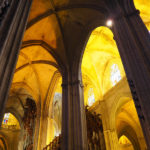
The Cathedral of the Holy Virgin in Sevilla (Cathedral de Santa Maria de la Sede), is one of the most magnificent and largest Gothic churches in Europe. It is also the third-largest church building in the world. It was created in the place of a mosque built by the Muslim Almohad dynasty. Today, the only remains of the mosque are the Giralda bell tower (a former minaret) and the inner courtyard with orange trees called “Patio de Los Naranjos“. In 1987, the Cathedral Church and the Giralda Tower were inscribed on the UNESCO World Heritage List.
There is an impressive altar inside the cathedral (the largest in Spain), a sculpture of the crucified Christus dating from the XVII and the tomb of Christopher Columbus. The royal chapel contains the remains of King Ferdinand III, also known as the “Saint” (he was elevated to the altars in 1671), who liberated the city and much of Andalusia from Moorish domination. After the liberation of Sevilla from the Moors, he created there a new capital city.




Giralda (minaret)
The construction of Giralda began in 1184, during the Moorish period and it took 12 years to finish it. For its construction, there were used remains of the ancient Roman city of Italica, which is near Sevilla. The Giralda served not only as a sacral place but also as an observatory.
There are no stairs inside the Giralda. The entrance to the top is possible thanks to the ramp (a type of steep corridor consisting of 35 segments). The corridor was wide and tall enough to let the muezzin reach the minaret’s top on horseback, from where he could deliver a prayer call.
Today – the tower’s first two-thirds is a former minaret, and the upper third part is Spanish Renaissance architecture. After Sevilla was taken by the Christians, the copper spheres that originally topped the tower fell during an earthquake in 1365. The spheres were replaced with a cross and a bell. The new cathedral incorporated the tower as a bell tower. It was eventually built higher during the Renaissance period. The Christians added 17 steps at the end of the tower’s ramp, which is now leading up to the balconies with bells.
Giralda’s name
In 1568, the bell tower was topped with a bronze statue of a woman holding a shield and a palm tree – symbolizing faith. The figure is 4 meters high and is set on a weather vane. From the Spanish word “girar” – turn “, the figure began to be called Giralda. Over time, this name was taken over by the tower itself. The entire tower, together with the figure on the top, is 104 m high. Even though Giralda was rebuilt during the Renaissance, today it is one of the most important symbols of the city.


Courtyard of the Orange Trees
The courtyard “Patio de Los Naranjos” was built in 1186. It has a rectangular shape measuring 43 by 81 meters and is planted with orange trees. Until Christians took over the city, the garden served all the traditional Muslim functions: there was a cemetery and a reception hall, it was used to teach, and hold trials and served as a place for numerous cultural events.


Cathedral – admission tickets and visiting hours
The admission ticket to the cathedral costs 11 euros* for an adult, and children up to 14 years old can enter for free. Pensioners and students up to the age of 25 – can enter for 6 Euro. The ticket also entitles you to a one-time visit to the Sevilla Divino Salvador church.
*prices from 2023
Opening hours:
- Mondays – from 11.00 a.m. to 3.30 p.m.
- Tuesday to Saturday from 11.00 a.m. to 5.00 p.m.
- on Sundays from 2.30 p.m. to 6.00 p.m.
I advise buying entrance tickets online, as it will allow you to avoid standing in a long queue at the cash register. Online ticket holders enter the cathedral from a different side, and the entrance to Giralda is included in the price of their ticket.
More information can be found directly on the Sevilla Cathedral’s website.
The Cathedral can be also seen during a guided tour, which takes 2h. For more check the below website: Cathedral of Seville Guided Tour*.
Alcazar Palace
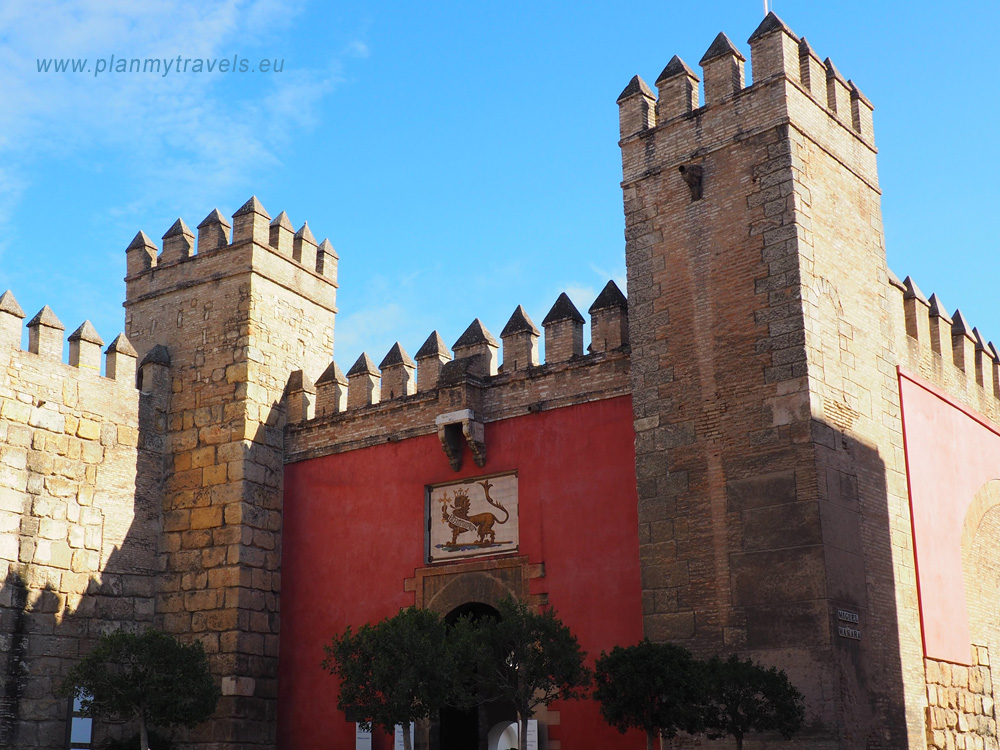
The palace complex Alcazar has been used for centuries as a residence of subsequent rulers. To this day, rooms located on the second floor of the palace are used by the royal family during visits to Sevilla.
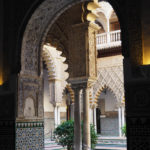
The first Moorish palace was built in this place in the tenth century. The main reconstruction took place in the years 1350-69 on behalf of the Christian King Peter “the Cruel”. He was a great supporter of Arab architecture. The Alcazar castle is built in the style of Mudejar. Here you can see decorations made of cedarwood, colourful ceramic tiles (azulejos) and lace stucco.




Gardens of the Alcazar Palace
An important element of the palace is its beautiful garden. There are numerous palm trees, myrtles, oleanders and cypresses. There are fountains and ponds, winding paths and hidden benches. The park is very pleasant especially during warm days because the air is pleasantly moist here and saturated with the scent of flowers.


The palace has witnessed several important events in the history of Spain. A decision was made here to send sea expeditions, including one of Ferdinand Magellan’s. Also, here Christopher Columbus was received by Isabella of Castile and Ferdinand of Aragon after his trip to America.
Alcazar – entrance tickets and visiting hours
From October to March, the palace is open from 9.30 a.m. to 5.00 p.m., and from April to September, from 9.30 a.m. to 7.00 p.m.
Admission to the lower parts of the palace and gardens costs 13.5 euros* You can also visit some rooms located in the upper part of the palace for 5.50 euros*.
*Prices from 2023
In the period from March to October: on Wednesdays and Thursdays there is a possibility of buying a night tour – an admission ticket is 14 Euro.
In front of the entrance to the palace, there is a long queue waiting for tickets, but it is possible to buy tickets online and enter out of turn. Tickets online can be purchased for Alcazar tickets.
You can also buy a ticket for the Alcázar of Seville Guided Tour*
Pilate’s House (Casa de Pilatos)
Contrary to the suggestion of this name, Pontius Pilate never lived in the House of Pilate. The building is also not a copy of the Roman governor’s villa in Jerusalem. Its name was created in the sixteenth century. In front of its entrance, there was the first station of the Way of the Cross (judgment of Pontius Pilate) during the procession of the Holy Week celebrations.
The architecture of this 16th-century palace is a successful combination of Mudejar and Renaissance styles. It is the whole palace complex, which consists of many rooms, courtyards and gardens. The most well-known part of the Pilate House is a rectangular, Andalusian courtyard. In the middle of the courtyard there is a beautiful marble fountain, and around it (on two floors) there are cloisters, leading to the rooms. The palace has two charming gardens. In most rooms of the lower storey of the palace – walls are decorated with tens of thousands of hand-painted ceramic tiles – azulejos. In the palace, you can find also an interesting collection of Roman sculptures and paintings by eminent artists of the Golden Age of Spanish culture. They belong to the collection of the princely family of Medinaceli, who is the current owner of the palace.
Pilate’s House – film inspirations
Pilate’s house is considered the original prototype of Andalusian palaces found in southern Spain. It was used many times as a movie plan for some Hollywood super-productions. Movies that were filmed there: “Lawrence of Arabia” (1962), “1492: Journey to Paradise” (1992), “The Kingdom of Heaven” (2005) and “Explosive Pair” (2010).
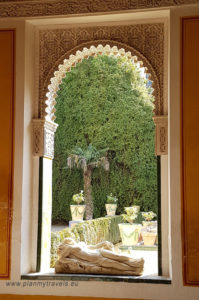
The palace is beautiful and magical, but surprisingly visiting it is not planned by tourists during their Sevilla sightseeing. Thanks to this, however, you do not stand here in a long queue to enter and there are no crowds of visitors. I strongly urge you to visit this palace, as it’s a great place and an unforgettable experience.
Pilate’s House – admission tickets and visiting hours:
From November to March, the castle is open from 9.00 a.m. to 6.00 p.m. From April to October from 9.00 a.m. to 7.00 p.m.
An admission ticket which will allow you to visit the whole palace complex costs 10 euros. The upper floor can only be entered with a guide (entrance every half hour). You can also buy a ticket only for the lower part of the palace and gardens for 8 Euro.
Each ticket allows visiting the palace with an audio guide. Available languages are English, Spanish, French, Italian, Portuguese, German and Japanese.


Spanish Square and The Maria Luisa Park
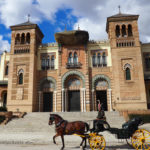
Spanish Square (Plaza de España) and all buildings erected around it – were created in connection with the Ibero-American exhibition, organized in Sevilla in 1929. The exhibition featured novelties of Spanish industry and craft. The square was built based on the project of the Sevilla architect Aníbal Gonzáles.
It is a huge town square in the shape of a semicircle, around which stands the palace and exhibition pavilions. The central facade was built in the Baroque style, while the rest of the building was built in the Renaissance style. Also, there are two corner towers, designed based on the shape of the Giralda.
The buildings create a very decorative and colourful picture with lots of columns and interesting decorations. On the walls of the building, there are coats of arms and achievements of individual provinces of Spain, and everything is presented on hand-painted tiles.
The interior of the semi-circle is occupied by a town square, surrounded by a canal on which boats float (cost of renting approx. 5 Euro). There are four bridges across the canal, representing the four historical lands of Spain: Castile, Aragon, León and Navarra. In the central part of the square, there is a fountain.


Maria Luisa Park
The park was created for the World Exhibition event in 1929. The former park areas belonged to the San Telmo Palace. In 1893 they handed over the park area to the city for public purposes. The transformation of this area into a park took place in 1911. It has survived to this day.
The park covers an area of approximately 40 ha and is the largest green area in Sevilla. It is eagerly visited not only by city residents but also by tourists. There are several colourful tiled fountains, ponds, lush plantings of palm trees, orange trees, Mediterranean pines and stylized flower beds, as well as several romantic gazebos hidden behind grapevines. The park also acts as a botanical garden. In addition to lush nature, it is also a place inhabited by pigeons, green parrots, ducks and swans.


American Square
American Square is at the end of Maria Luisa Park. This place was also created for the needs of the World Exhibition. On the square, there are great buildings, including the Mudejar Pavilion with the Museum of Arts and Traditions (Museo De Artes Y Costumbres Populares), or the Pavillion with the Archaeological Museum (Museo Arqueologico).
American Square is often visited on weekends. In spring and summer, you can rent go-karts, children eagerly feed pigeons flying above their heads, and the park is filled with the scent of blooming roses.


Sevilla – what else is worth seeing?
Plaza de Toros de la Maestranza and Bullfight Museum
“The history of bullfighting is so closely linked to the history of Spain that the latter cannot be understood without understanding the former.”
José Ortega y Gasset

Corrida is a traditional bullfight, a spectacle that is still very popular in Spain. According to some sources – this custom was brought to the Iberian Peninsula by the Arabs, other versions speak about Carthaginians or Romans. Once a custom popular among the aristocracy, even kings took part in the fighting (eg Filip IV).
Even the most ardent opponents of the Corrida should see the arena in Sevilla because this building is one of the oldest and most beautiful places of this type in Spain. During a bullfighting season – it is possible to buy tickets and see the spectacle. The arena can seat 12,000 spectators. Detailed information about tickets can be found here tickets for Plaza de Toros.
There is also a possibility of visiting the arena on those days when there are no bullfights. Sightseeing takes place with a guide (entrance every 20 minutes). Additionally, there is an audio set given for free, with 9 languages to choose from. During this tour, you will visit a small Bullfighting Museum, which exhibits a collection of costumes (including a purple cape painted by Picasso), portraits and posters. You can also visit the chapel where bullfighters pray before going to the arena and you can also enter the arena itself.
Bullfight Museum – admission tickets and visiting hours:
Tickets can be bought directly at the museum, but as there are long queues in the season, please book additional time for it (30-60 minutes).
From November to March, the museum is open from 9.30 a.m. to 7.00 p.m. In other months is open until 9.00 p.m. On those days, when bullfights take place, the museum is open until 3.00 p.m.
The admission ticket costs 10 euros, and the duration of the visit is about 45-55 minutes. More information can be found directly on the website of the bullfighting arena.
The trip to the museum is very interesting. I recommend it to anyone who would like to learn more about this part of Spanish culture.



The Golden Tower
To this day, it has not been decided yet where its name comes from. Is it from gold-painted ceramic tiles that once adorned the building? Or did it come from the precious metal that was stored in it after being brought from the colonies?
It is known, however, that it originated in 1221. At that time it was one of 166 towers that were then created in the entire defence system of the Moors. Between the Golden Tower and its twin (no longer existing) tower on the other side of the Guadalquivir River, there was a chain blocking the entrance to the port. All ships coming back from the New World had to stop here, and all captains had to pay taxes on imported goods. This has made Sevilla a rich city.
Today, there is a small Maritime Museum, where you can find a few antique maps, navigational instruments and old documents.
The Golden Tower – admission tickets and visiting hours:
The tower can be visited from Tuesday to Friday from 9.30 a.m. to 1.30 p.m. On weekends from 10.30 a.m. to 1.30 p.m. The admission ticket cost is 3 euros.
More information can be found here: Torre del Oro.


The Guadalquivir River
A walk along the Guadalquivir River is the perfect place to relax and unwind. On both sides of the river, there is a walking path. An especially nice place is between the San Telmo Bridge (where the Golden Tower stands) and the Triana Bridge. On the side of the Arenal district along the path of Christopher Columbus, there is a pedestrian promenade and a bicycle path. From the side of the Triana district, charming nooks, narrow streets and a food market wait for us. It is worth visiting this district and walking along Pureza Street.


Triana
Triana is the most popular and colourful district of Sevilla. Low-rise buildings, flowered balconies and small patios lined with colourful ceramic tiles are characteristic of this district. There are numerous bars and taverns.
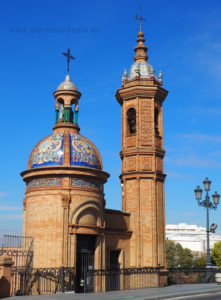 At the height of the Izabela II bridge, which connects Triana with the left-bank part of Sevilla, we can see the Castle Museum of Saint George (Castillo de San Jorge). It is a remnant of the Spanish Inquisition headquarters located in it. The Inquisition occupied the castle for over 300 years (1481-1785) and acted in the name of defending the Catholic faith. The castle also had a court and a famous Andalusian prison. Today, part of the castle ruins was adapted to the Food Market (Mercado de Triana), created in this place in 1823. There is also a small museum. Unfortunately, there are not many remains from the times of the Inquisition in the ruins of the castle. Although its museum offers an interactive form of sightseeing with a very interesting audio-visual frame.
The museum is open from Monday to Friday from 11.00 a.m. to 6.30 p.m. On weekends it is open from 10.00 a.m. to 3.00 p.m. Free entrance!
More information can be found on the website of the Andalusia promotion office.


Palace of San Telmo
This magnificent palace (Palacio San Telmo) is one of the most impressive buildings in Sevilla. Certainly, it is also one of the best examples of the Baroque style of this city. It is located south of the city centre, between Hotel Alfonso XIII and the Guadalquivir River. The big renovation which took 10 years and cost over 40 million euros, ended in 2010. It is one of the city’s greatest monuments today. Currently, the palace is the seat of the President of the Regional Government of Andalusia (Junta de Andalucia).
The San Telmo Palace was built in 1682 as a home for orphan sailors’ children. Then it was transformed into a maritime academy, training pilots, navigators and high-ranking officers. The palace was named San Telmo (Saint Elmo), after the name of the patron of sailors. The Academy then transformed into a royal palace, whose private estates extended to Maria Luisa Park.
Unfortunately, the palace for visitors is open only on pre-arranged group entries, available only in Spanish. Currently, it is also not open to visitors to its internal courtyard. This is expected to change soon after all the restoration works are over.


Metropol Parasol
This building is quite new in the city as it was established in 2011. Since that time has already managed to arouse many fierce discussions and inflame many emotions. One of the most controversial topics was the cost of its construction. This project has absorbed a budget of over 100 million euros. The “Metropol Parasol” is said to be the most ambitious, expensive and controversial urban project in Sevilla since the World Expo ’92 exhibition.
The project was created in 2004. It was part of the search for an idea for the revitalization of a square located in the city centre “Plaza de la Encarnacion” in Sevilla. The author of the design is the German architectural studio, Jurgen Mayer. The construction has dimensions of 150 to 70 meters and an approximate height of 26 meters.
What was the main aim of that project? It was to define the relationship between the historical and contemporary parts of the city. Metropol Parasol has become an icon of Sevilla. Described as “Big Mushrooms”, built of six large umbrellas – has a commercial and recreational function. There is a market hall, cafes and restaurants. On the roof of the structure, there is an observation deck, where you can take the elevator. There are winding sidewalks that allow you to walk around the rooftop.
This place is worth a visit. For sure there is interesting architecture, but also beautiful views spreading from the roof to the entire city.
Metropol Parasol entrance
The entrance fee is 1,35 Euro and is open from 10.00 a.m. to 2.00 p.m. and from 6.00 p.m. to 12.00 p.m
More information and a detailed map of the location of this place can be found in Metropol parasol info.


Sevilla – where to sleep?
The best choice for an overnight stay during a few-day visit to Sevilla will be the Old Town area. It is an ideal base for all walks around the city and convenient access to most attractions.
We were staying in Hotel America, located in Plaza del Duque de la Victoria. Sevilla Cathedral, the Giralda Tower and the beautiful Santa Cruz district are a 10-minute walk away from here. There is a bus stop in front of the hotel providing easy access to the AVE high-speed train station. Next to the hotel, there is the El Corte Ingles shopping mall, as well as numerous bars and restaurants
Hotel rooms are very nicely decorated, spacious and comfortable. The bathroom had a double sink and a big rain shower. Our hotel was also serving very tasty breakfasts, with a wide range of dishes. Room service and hotel employees were very polite, always smiling and willing to help.
It is a very good offer, suitable for demanding people who are looking for comfort and peace. The upper floors of the hotel have an amazing view of the city. Price is proportional to expectations and the offered standard. I can sincerely recommend it.
For more information please check directly at the Sevilla Hotel America website.
Sevilla – other useful information
Laundromats
In Spain, self-service laundromats are very popular. In big cities, there are well-known network laundries, in smaller towns you can find local self-service laundries. We planned to pack small suitcases for our journey so that we could move around easily and fast. For this purpose, we packed only for a few days, planning to visit the self-service city laundry. In Sevilla, this kind of place was a two-minute walk away from our hotel.
The laundry place was very clean and …. colourful :-). Instructions are written on walls in Spanish and English. Many colourful pictograms and very intuitive operations.
In the laundry room, there were 4 washing machines (with different capacities) and 3 dryers.


Laundromats – how to use them?
Choose a washing machine and put there your clothes. After that, you need to approach the cash register. Here you need to choose the number of the washing machine where your laundry was placed. Payments can be made in cash or by card. After payment, the washing machine selected by us will start automatically. Washing powder and softening liquid are added automatically to each wash, so you do not have to bring anything with you. Payment for drying has to be done in the same way as for laundry. It is worth checking if 15 minutes of drying will allow you to take dry clothing to the hotel. We had a few things that required a second drying round.
A self-service laundry is a very convenient option for travellers. We checked it perfectly during our stay in Japan and now also in Spain. During the laundry process, you can go out and come back at the time which is displayed on the washing machine panel. There is also an ironing service available. In general – this was a very nice experience: a very clean laundromat with affordable prices. I would highly recommend this place if you are looking to do your laundry.
The price for 30 minutes of washing costs from 4 to 8 Euro, and drying (15 minutes) – is 2 Euro. The laundry room is open every day from 9.00 a.m. to 9.00 p.m.
More information can be found on the Sevilla laundry website.
Sevilla – quick summary
Our few-day stay in Sevilla was a very pleasant time. Several attractions are worth seeing. Anyway, the most important thing is to find time for a peaceful stroll around the city. Sevilla delights both during the day and night. There are many beautiful buildings here that will force you to take a picture. Watching them after will give you natural joy.
In the evenings, after sunset – the city comes to life. Narrow streets are filled with a crowd of strollers. Numerous restaurants and tapas bars attract customers not only by music but above all by the aromas of the local dishes.

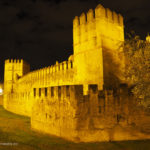
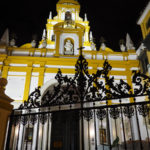
Evening sightseeing has a specific charm and allows you to discover a completely new face of the city. In the evening the city shines with wonderful illuminations. That allows you to pay attention to those details that were not visible during the day when the sun was right in your eyes.
Sevilla is a place worth visiting at any time of the year. A visit outside of the high tourist season, however, seems to be more reasonable. Locals say that during hot summer days, it is impossible to get out of the house because it is too hot. I think it is worth taking into account when planning a trip to Andalusia.



Spain, my other post
I encourage you as well to read my other posts about Spain:
*links to the offer from Klook are affiliate